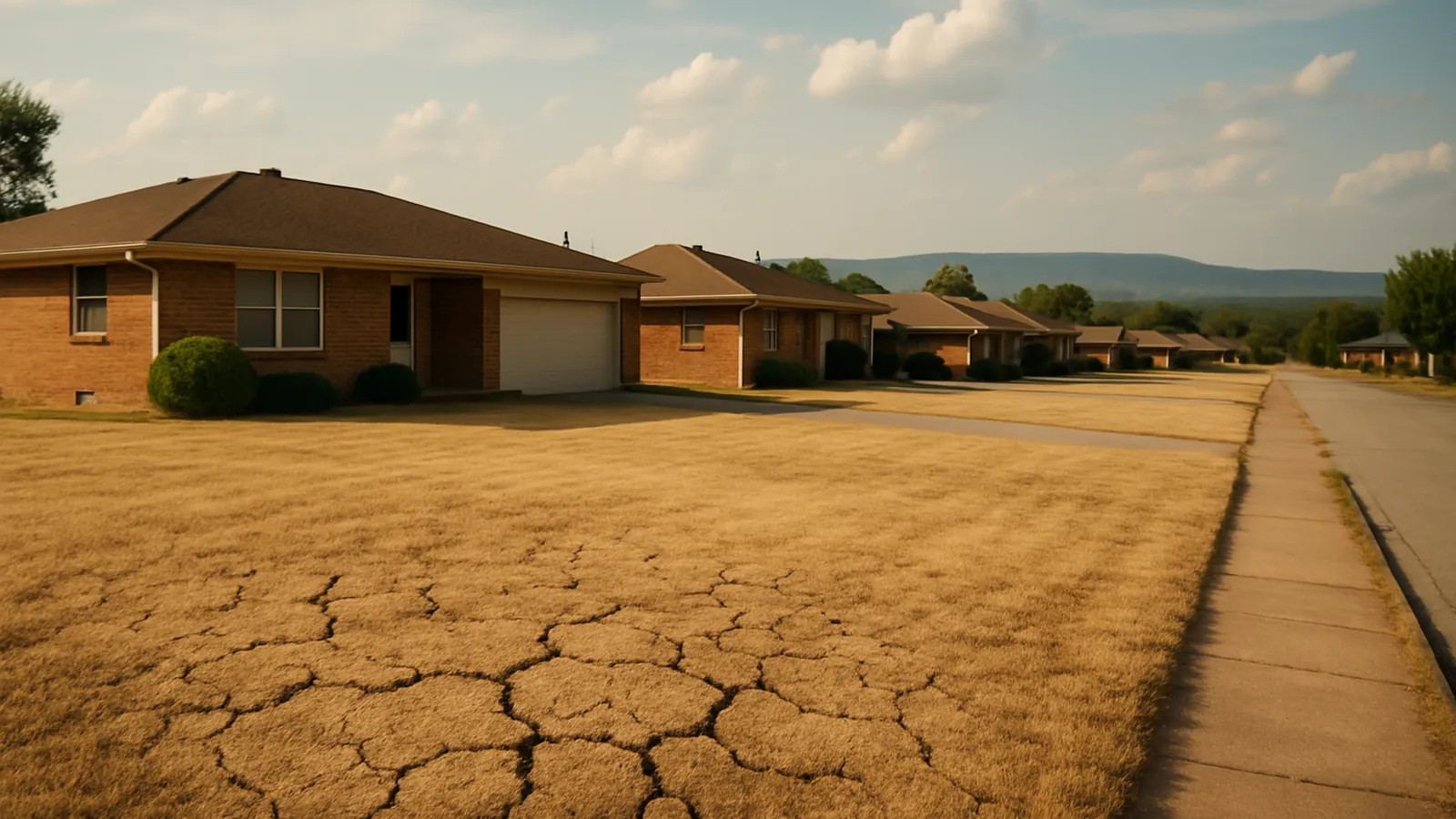
Foundation repair in Tulsa costs $4,000–$15,000 for most full repairs, with piers commonly $1,200–$3,000 each. Expansive clay across the Arkansas River valley swells in wet stretches and contracts hard through dry Oklahoma summers — the swing behind nearly every stair-step crack in this metro.
Below: the symptoms worth acting on, why Oklahoma's weather is the real culprit, and what each repair actually involves.
What a moving foundation looks like from inside the house
Foundations rarely announce failure at the footing. The house above reports it first:
- Stair-step cracks through brick or block — masonry tracking a footing that dropped
- Doors and windows sticking in late summer, often freeing up after the rains return
- Diagonal drywall cracks from the corners of doors and windows
- Floors sloping toward one wall, or gaps appearing under baseboards
- Slab cracks telegraphing through tile or vinyl in a consistent line
- Separation at the brick line where a porch, chimney, or addition meets the house
One symptom deserves a dated pencil mark and a season of watching. Two or more — or any crack that widens between spring and August — deserves a measured evaluation while the fix is still a few piers rather than a rebuilt corner.
Drought to deluge: Oklahoma's foundation problem
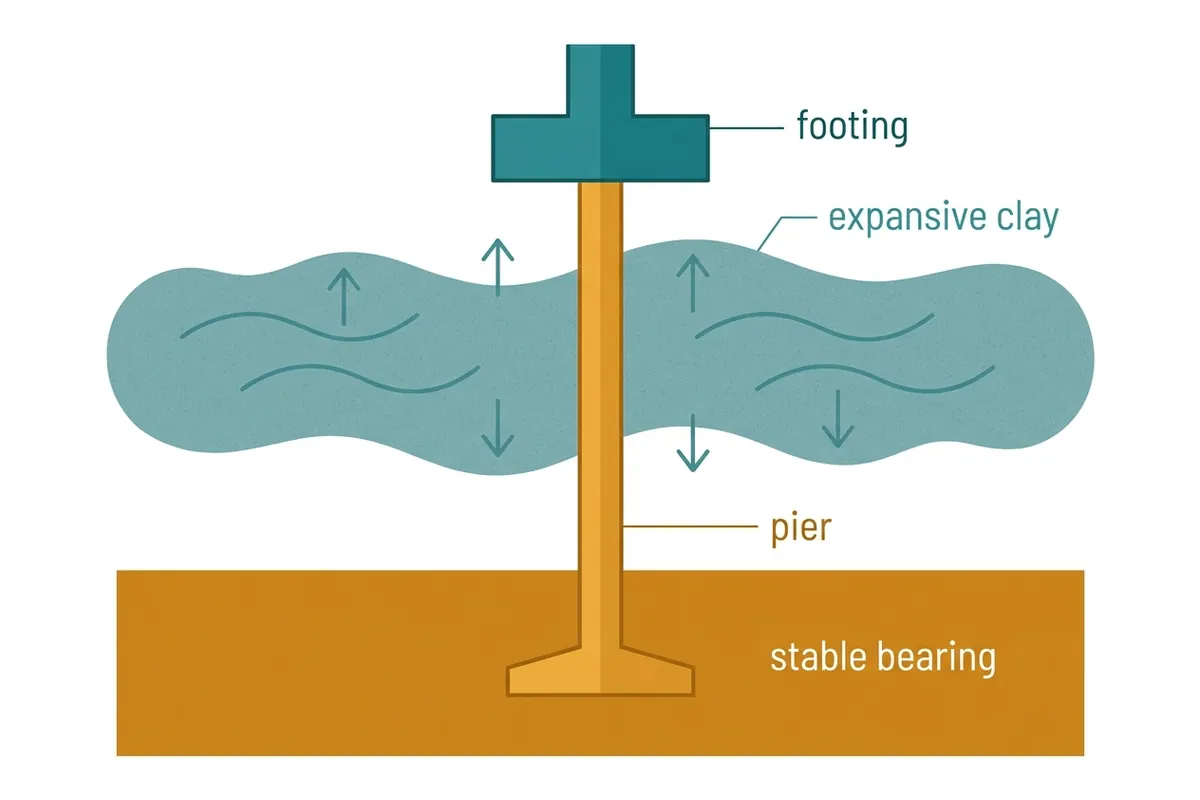
The clay across the Arkansas River valley and the uplands around it carries high shrink-swell potential — it expands substantially when saturated and contracts substantially when dried. That much is true of clay in many places. What makes Tulsa harder is amplitude: Oklahoma swings between extremes faster and further than most of the country. A summer that bakes the ground until it cracks visibly, followed by a wet system that saturates the same soil within weeks.
Roughly 42 inches of rain a year sounds moderate until you notice how unevenly it arrives. The foundation doesn't experience an annual average; it experiences the swing. Soil that contracts away from a footing in August and swells against it in October is loading and unloading the structure twice a year, every year. Repairs that last here either reach below that active zone or reduce the moisture swing driving it.
The repairs that fix Tulsa houses
| What you see | What's happening | The fix | Typical range |
|---|---|---|---|
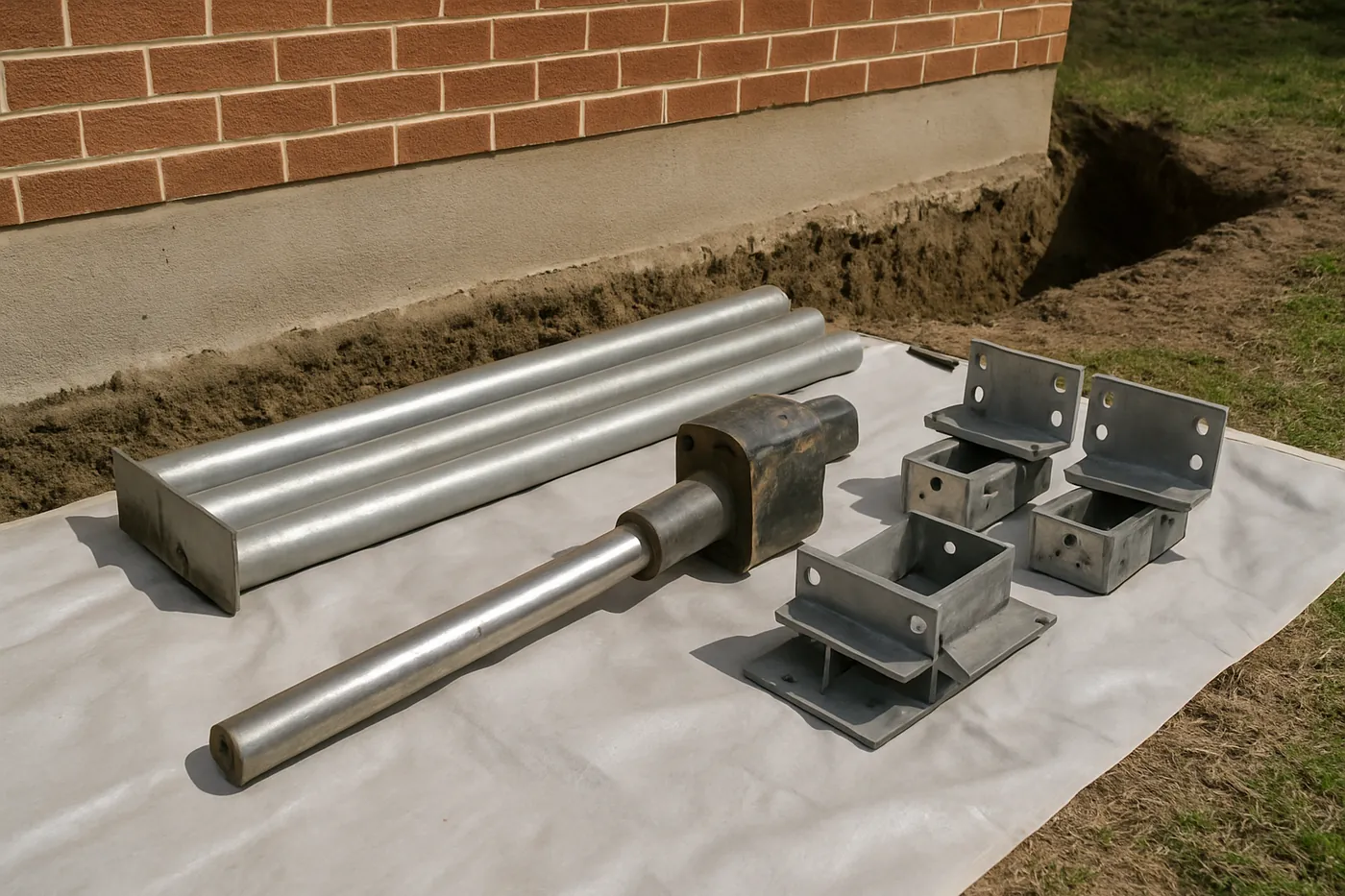
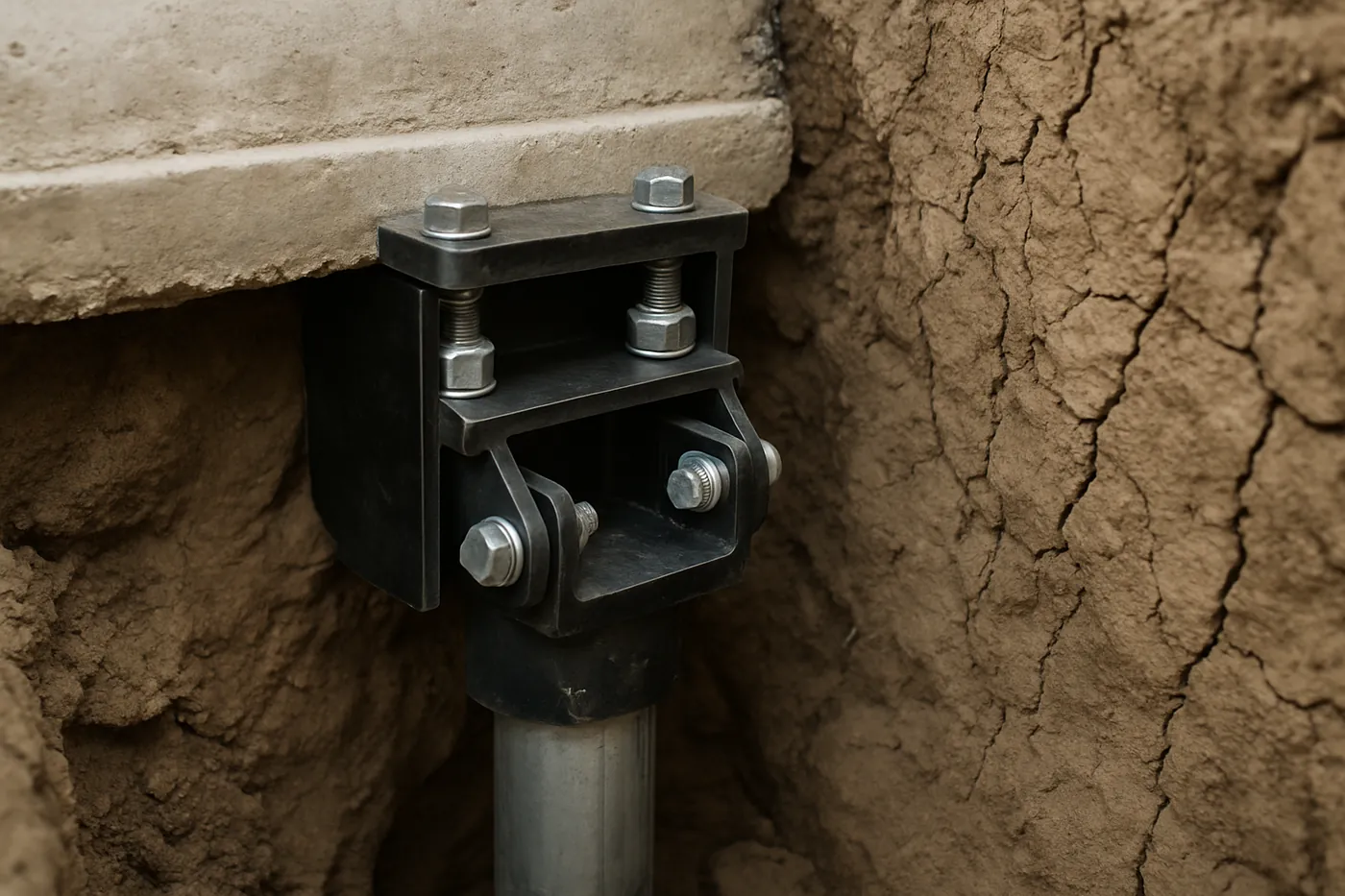
| Stair-step cracks, dropped corners, sloping floors | Footing losing support as clay contracts | Piers below the active clay | $4,000–$15,000 |
| Interior slab cracks, racked door frames | Differential movement beneath a slab-on-grade | Perimeter or interior slab support | $3,500–$12,000 |
| Cracks leaking or widening seasonally | Movement opening paths through masonry | Flexible-first injection | $400–$1,500 |
| Water standing near the foundation | Roof and lot water amplifying the moisture swing | Grading, extensions, drains | Under $500–$6,000 |
| Sunken driveway, patio, or walk panels | Backfill consolidating over contracting clay | Polyurethane lifting | $500–$2,500 |
Multiple symptoms usually share one cause. Scoping them in one evaluation is how the repair holds — and how you avoid paying two mobilizations for one clay problem. The decisions behind the table each have a page: how we diagnose drought-cycle settlement, what midtown’s pier-and-beam homes need, when helical piers beat push piers, how exterior and interior waterproofing compare for cellars and partial basements, what insurance actually covers, and when an independent structural engineer is worth the fee.
Midtown pier-and-beam or suburban slab: two different patients
Tulsa's housing splits in a way that decides what an evaluation looks for. Midtown and the older neighborhoods — the brick homes around Utica, Swan Lake, and the Brookside area — sit on pier-and-beam foundations or partial basements, where clay movement shows up as sagging floors, crushed pier caps, and posts that have settled into bare dirt where a footing belonged. The suburban belt — Broken Arrow, Owasso, Jenks, Bixby — is predominantly slab-on-grade, where the same soil produces racked door frames, cracked tile, and floors that read out of level with a laser before anything is visible.
Same clay, two entirely different repair playbooks. The evaluation identifies which house you own before anyone prices a thing.
How the evaluation works
We walk the house inside and out: crack widths measured and photographed, floor elevations shot with a laser, exterior grading and downspouts traced for the water story, and crawl framing probed where the house has one. You get a written scope naming the cause, the repair, the price per line, and the timeline — and if the honest finding is "mark it and watch it through one more dry season," that's what the report says. The evaluation is free either way.
Foundation repair questions Tulsa homeowners ask
How much does foundation repair cost in Tulsa?
Most full repairs run $4,000 to $15,000, with piers commonly $1,200 to $3,000 each and single crack repairs from about $400. Pier count, foundation type, and how much drainage work the lot needs set your number. Every figure follows a free measured evaluation with floor elevations. Our Foundation repair cost breakdown for Tulsa shows what drives each figure, line by line.
Why are Tulsa foundations so prone to movement?
Oklahoma's weather does the damage. Green Country clay has high shrink-swell potential, and this state swings between drought and deluge harder than most — a bone-dry August that opens cracks in bare ground, followed by a wet stretch that saturates the same soil within weeks. That amplitude, not the clay alone, is what moves foundations here.
My doors stick in late summer and free up after the rains. Normal?
That's the Green Country cycle talking, and it's the most common early symptom in this market. Mild seasonal sticking that fully reverses can be watched with a dated pencil mark. Sticking that worsens year over year, or that arrives with new stair-step cracks, means the footing is losing ground each cycle and deserves measurement.
Do slab homes and midtown pier-and-beam homes need different work?
Slab homes and midtown pier-and-beam homes do need different work, and Tulsa has plenty of both. Suburban slab-on-grade homes typically need perimeter piering, interior slab support, or polyurethane leveling. Older midtown homes on pier-and-beam or partial basements need pier, sill, and girder work, plus footing corrections where posts have settled into bare ground. The evaluation identifies which house you own first.
How deep do piers go in Tulsa?
Past the active clay zone, which in this area can run several feet down. Piers are driven hydraulically until they refuse further advance on stable bearing, and refusal pressure is logged per pier. Depth varies across a lot and across the metro — river-valley properties often differ from upland ones a few miles away.
Should I worry about a crack in my slab?
Slab cracks are common and often harmless on their own. What matters is the pattern around them: doors racking out of square, tile cracking in a line, floors reading out of level with a laser. A crack with none of that is usually shrinkage; a crack with all of it is movement, and the difference is measurable in about an hour.
Does drainage really matter this much?
On expansive clay it's half the repair. Roof water dumped at a corner keeps that clay swollen while the far side of the house bakes through an Oklahoma August — the moisture differential that racks a structure. Downspout extensions and regrading often cost a few hundred dollars and remove load the foundation fights every season.
Will homeowner's insurance cover this?
Usually not. Standard policies exclude earth movement and settling, which is precisely what this clay does. Exceptions exist for sudden events, like a plumbing leak washing out soil beneath a footing. We document cause during the evaluation, which is what any adjuster conversation requires.
Foundation repair across the Tulsa metro
Broken Arrow · Owasso · Bixby · Jenks · Sand Springs · Sapulpa · Claremore · Catoosa · Glenpool · all service areas
Get a free Tulsa foundation evaluation
Tell us what the house is doing — stair-step cracks, doors that stick every August, sloping floors, separating trim — and we’ll schedule an evaluation with photos and measurements. We reply the same business day.