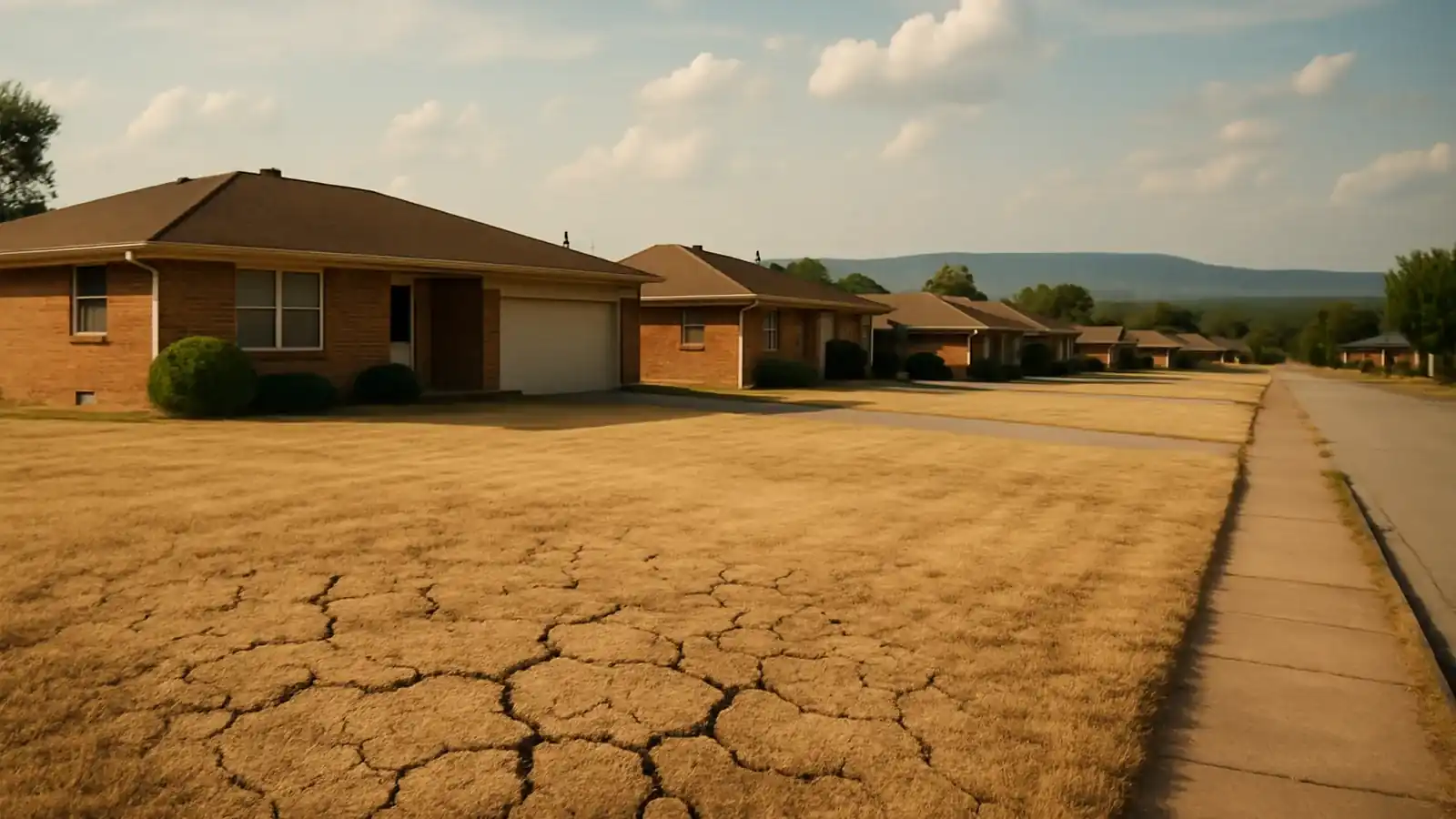
Helical and push piers for Tulsa foundation repair each cost about $1,200–$3,000 per pier, so the house, not the price, decides between them. Push piers use the home's own weight to press down until they stop, with the stopping point recorded, which suits heavy brick and stone. Helicals are screwed in to a measured torque, which suits the lighter one-story slab ranches and additions common across the Tulsa suburbs.
How each proves capacity, and how Tulsa’s split housing stock picks between them.
The same promise, proven two ways
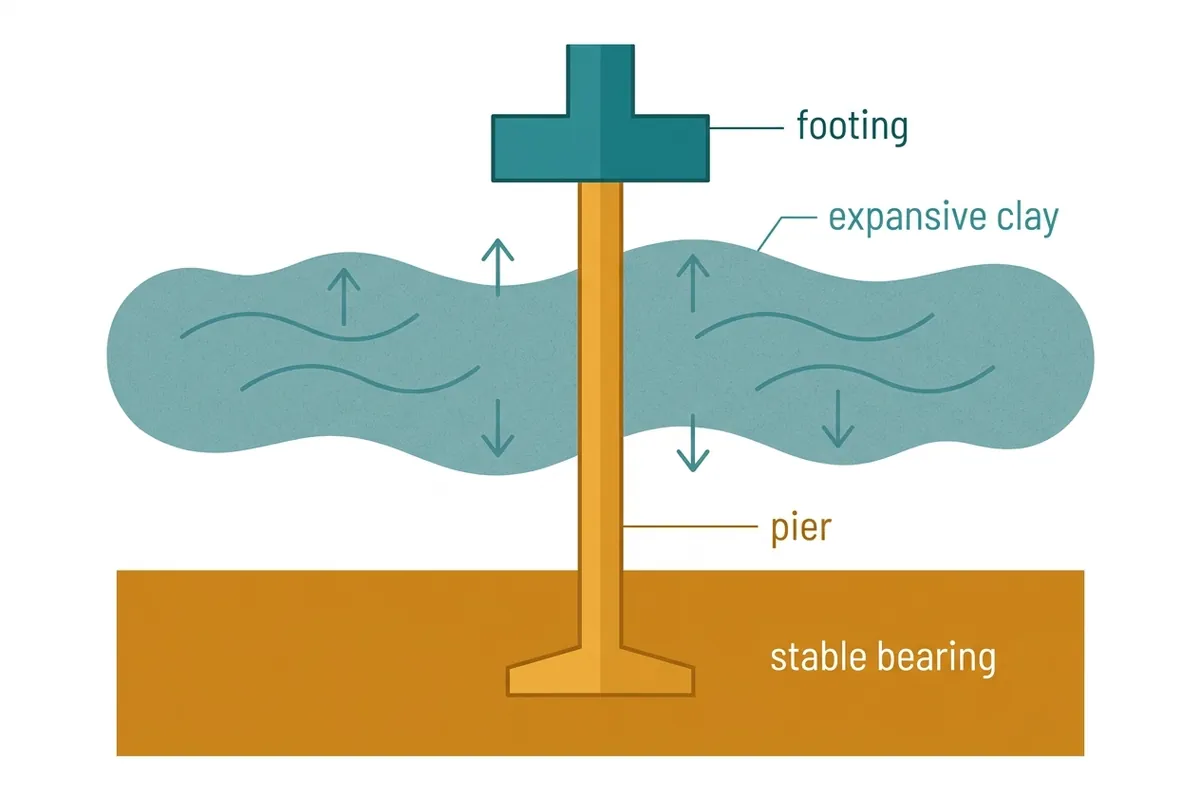
Both piers exist to move a footing’s load below the active clay (beneath the depth band where Green Country’s drought-to-deluge swings operate) onto strata that hold still. A push pier is hydraulically driven beside the footing, using the structure itself as reaction weight, until it refuses to advance; that logged refusal is its proof. A helical pier is screwed in by a drive head, and its installation torque correlates with soil capacity. The gauge proves the pier as it turns, with no help from the house above.
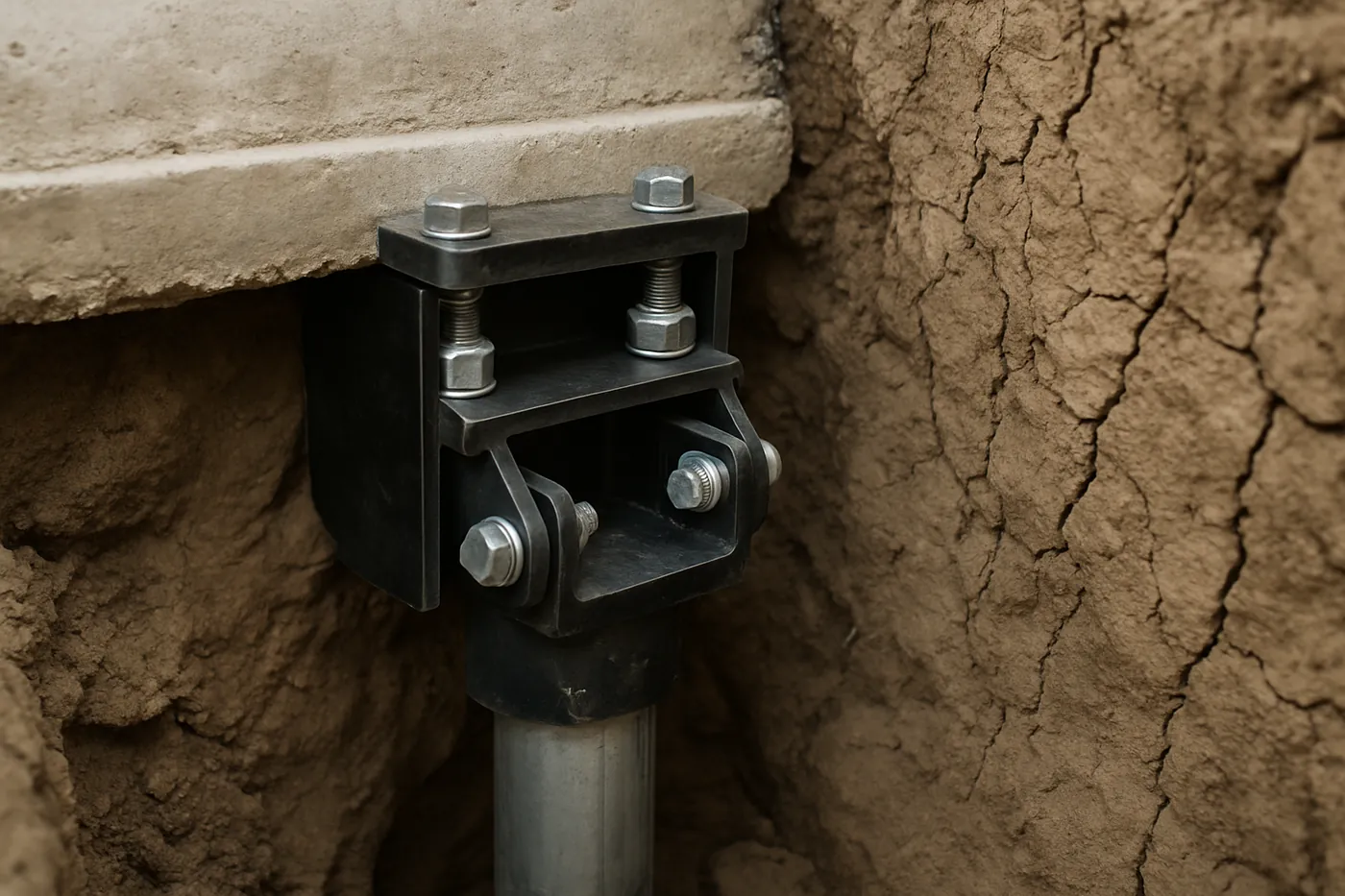
Side by side
| Push piers | Helical piers | |
|---|---|---|
| Advance | Driven against the structure’s weight | Rotated to specified torque |
| Proof | Refusal pressure, logged per pier | Installation torque, logged per pier |
| Needs house weight | Yes | No |
| Tulsa fit | Two-story masonry, heavier midtown perimeters | Slab ranches, pier-and-beam work, porches, additions |
| New construction | Not possible | Yes: proven before framing |
| Cost | $1,200–$3,000 per pier; depth and access set the spread | |
What the housing split does to the decision
Tulsa’s stock argues both sides. The slab suburbs (Broken Arrow, Owasso, Jenks, Bixby) are light construction where push piers struggle to find honest refusal and helicals shine. Midtown’s pier-and-beam bungalows are lighter still, and often need no deep steel at all (interior footing work does the job) but where a perimeter needs piers, the masonry-heavy examples can drive push piers properly. Depth is the other variable: bearing sits differently in river-valley alluvium than on the uplands, and more feet means more sections at either type. Whether piers are the right repair in the first place is the settlement diagnosis; install mechanics live on the piering page.
Reading a pier bid like a skeptic
Put three questions to every bidder: what record each pier will get (torque or stopping pressure), what depth the price assumes and what happens if firm ground is deeper, and which part of the house at which spots justifies the pier type proposed. Bids that answer all three tend to land on the same fair scope; the cost guide shows the arithmetic those answers should produce.
What the pier warranty is actually worth
Look at the warranty before the total. It usually covers what the piers hold up (the supported section carrying its design load), not the whole house and not parts left without piers. Four questions tell real coverage from marketing: can a buyer take it over, does that cost a fee, does it apply only to the piered section, and will it still stand if the company closes (warranties backed by a third party will; informal ones will not). With clay this active, also ask whether the warranty depends on you keeping up the drainage or the soil moisture; that is a reasonable condition, and most owners first learn of it when they make a claim. Keep the torque or depth log, since the warranty is measured against it.
Pier questions, straight answers
Do helical and push piers cost the same in Tulsa?
Yes, both land at $1,200 to $3,000 per pier, and the spread comes from depth to stable bearing and access, not the steel. Valley lots near the Arkansas can need more pier sections than upland ones, which moves cost more than pier type ever does. The choice between them is about proof of capacity, and that's set by what your house weighs.
Which type fits Tulsa's slab suburbs?
Usually helical. A one-story slab house in Owasso or Bixby does not weigh much, and a push pier pressing against it can lift the house before it reaches a solid stopping point. Helicals prove themselves: the torque needed to install them tracks how much they can carry, so the gauge confirms every pier whatever sits above it. Porches and additions work the same way anywhere.
Which type fits midtown's pier-and-beam stock?
Sometimes neither, and it is worth saying so. Settling in a pier-and-beam house is often fixed at the interior footings with new pads and releveling, with no deep steel at all. Where a perimeter beam or a stubborn footing does need a pier through active clay, helicals usually get the call: the wood-framed structure is too light to drive push piers well.
What proof do I get that a pier reached bearing?
A per-pier log, whichever type goes in. Push piers record hydraulic refusal pressure; helicals record final installation torque. Both correlate with capacity, both go in your file with the warranty, and both are what a future buyer's inspector wants to see. A bid that won't commit to per-pier logging is asking you to take depth on faith.
Can both types go on one job?
All the time. A midtown home with heavy brick walls and a light addition at the back might get push piers along the original footing and helicals beneath the addition: one scope, one warranty, two kinds of proof. The weight at each spot picks the pier, and the survey picks the spots. Using one type everywhere suits the company's equipment, not your house.
How long does installation take, and must we leave the house?
A typical house takes two to five days, depending on how many piers and how easy they are to reach, and almost every family stays home. Plan on machines in the yard, holes at the footings, and noise in the daytime. Indoors there is usually little disruption unless a basement wall is part of the job. The yard takes the damage you can see, so put its repair in the written scope.
Get a Tulsa foundation evaluation
Tell us what the house is doing (stair-step cracks, doors that stick every August, sloping floors, separating trim) and we'll pass it to one independent local specialist for an evaluation. A local specialist who serves Tulsa will call you back.