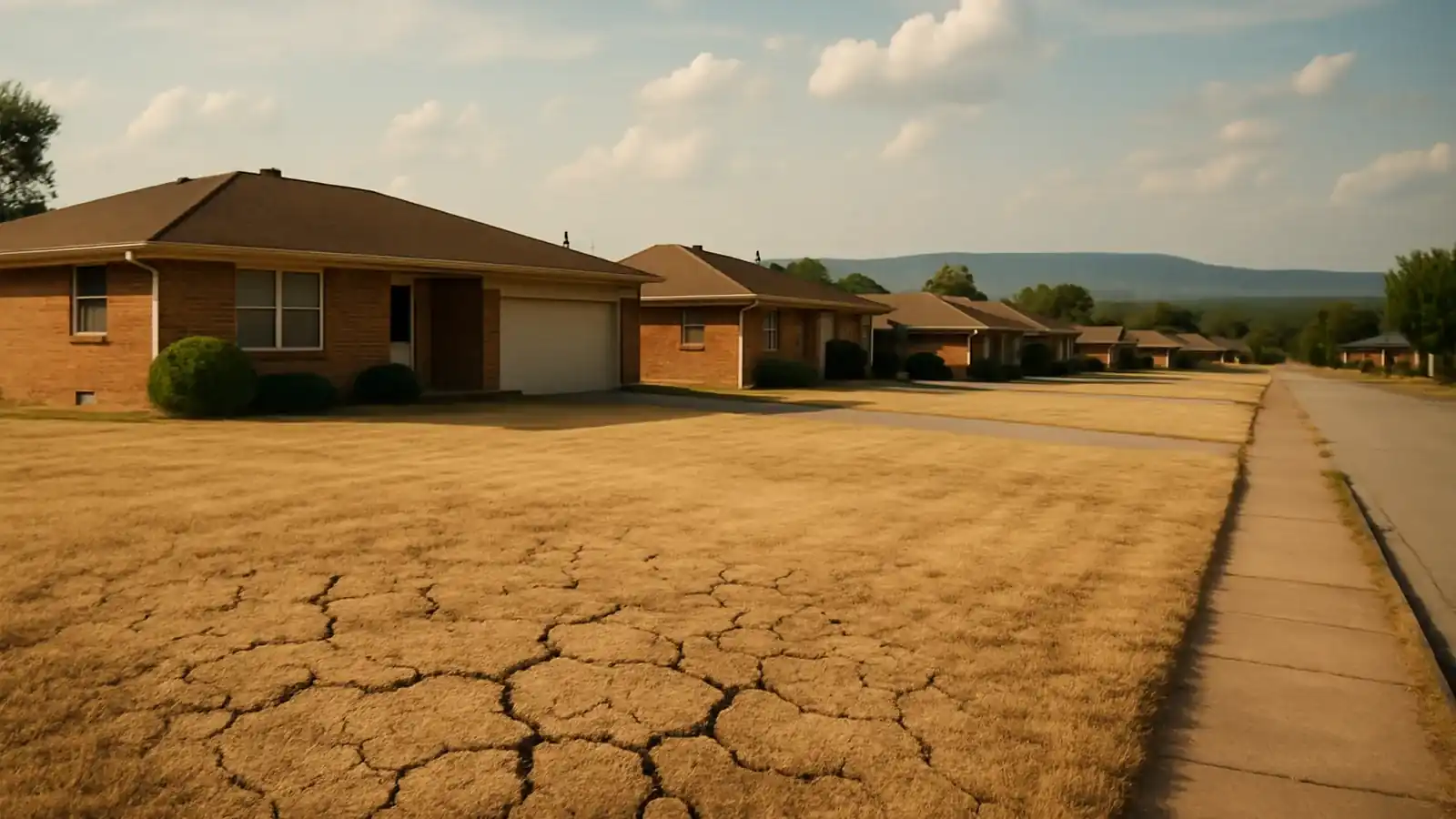
Drainage correction in Tulsa usually costs $1,500–$6,000 per lot, and basic downspout and regrading jobs often come in under $500. Swelling clay harms foundations through big changes in moisture, so evening out those changes along the foundation is the cheapest structural protection a Tulsa house can get.
Why water makes up half of any foundation discussion on Green Country clay.
Amplitude is the enemy, not water
Soil that stays evenly damp does little harm. What hurts Tulsa foundations is how far the moisture swings and how unevenly: one side soaked by downspouts while the other dries out through August. The foundation spans that difference, and the structure racks.
So the specialist should study the outside as closely as the inside: the gutters and where each downspout ends, the slope of the first ten feet of yard, mulch beds keeping the wall damp, the drip from the air conditioner, big trees pulling hundreds of gallons in a hot week, and which way the neighbor's yard sheds water. Those details often explain the cracks better than the cracks themselves.
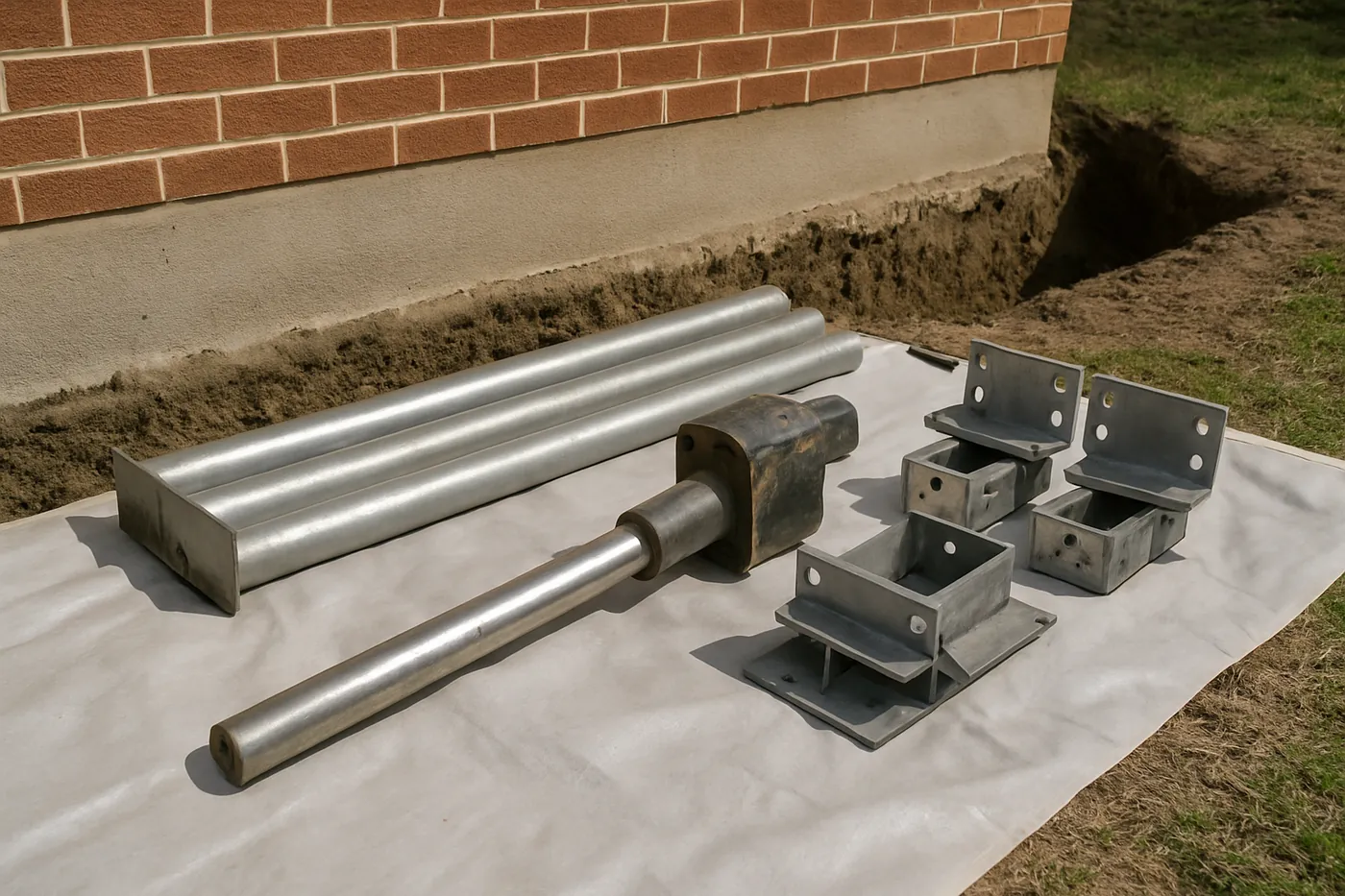
The ladder, cheapest first
- Downspout extensions: send roof water far from the wall; often under $500 and often all it takes
- Regrading: restore fall away from the foundation where decades of settling have reversed it
- Swales and surface routing: intercept runoff crossing the lot before it reaches the house
- Subsurface drain lines: bedded properly with a walked and verified discharge, sized for rain that arrives all at once rather than steadily
- Root management: a big tree can pull hundreds of gallons in a hot week, drying its side of the house faster than the others
Capacity moves up the list here. In a drought-to-deluge climate the question is not only where water goes but how much of it arrives at once, and surface routing that copes with a steady soak can be overwhelmed by a single storm.
What not to buy
A full drain system sold where extensions would work. Tulsa clay drains slowly, so a buried line with nowhere real to empty fails fast and at great cost, which is why every underground line should be traced to its outlet before it is priced. If four extensions and some regrading fix the problem, the written scope should say so, at that price.
Stop the water arriving, or manage it after it does?
The deluge half of Oklahoma's cycle arrives fast and all at once, and drainage that would satisfy a gentler climate backs up exactly when it matters here.
| Option | What it does | The catch in this market |
|---|---|---|
| Roof water discipline | Gutters and extensions carried past the backfill | Size for the storm, not the average: short extensions drown in the first deluge |
| Regrading | Ground re-pitched so it sheds away from the wall | The fix for lots that have settled toward the slab over years of cycling |
| Buried drain line | Perforated pipe intercepts water moving through soil | Earns its keep intercepting sheet flow before it reaches the clay at the wall |
| Interior drain and pump | Collects what still arrives and ejects it | The backstop for older midtown basements when the sky opens |
The same clay that floods in May bakes in August, so drainage here is one half of a moisture-evenness problem. The other half is not letting the summer get too dry.
Drainage questions, straight answers
Can drainage work prevent foundation repair?
Yes, if you catch it early. Clay harms foundations as its moisture rises and falls, so keeping moisture steady along the foundation shrinks those swings. Extensions and regrading often cost a few hundred dollars compared with thousands for piers, which is why they should lead the scope, not be tacked on as an extra.
What should the grading look like?
The yard should drop about six inches over the first ten feet away from the house. Many Tulsa lots lose that over the years as flower beds get built up and soil settles, until the slope runs backward and sends each storm toward the wall. Fixing it is moving dirt, not building anything, and it is the cheapest protection there is.
Should I water my foundation during an Oklahoma drought?
Keeping the soil at the drip line moderately damp through long dry spells does cut down the shrinking half of the cycle; think soaker hose on a timer, not a flood. It lessens the damage but does not repair it: a footing that has already dropped needs support, not water. Too much water causes the opposite trouble.
Do I need a French drain?
Sometimes, but often not. When a lot takes runoff from higher ground or keeps water against the foundation after storms, a well-built line with a real outlet is the answer. When the actual problem is four downspouts emptying at the wall, extensions fix it for about a tenth of the price. Ask for a quote on the smallest fix that stops the water.
Get a Tulsa foundation evaluation
Tell us what the house is doing (stair-step cracks, doors that stick every August, sloping floors, separating trim) and we'll pass it to one independent local specialist for an evaluation. A local specialist who serves Tulsa will call you back.