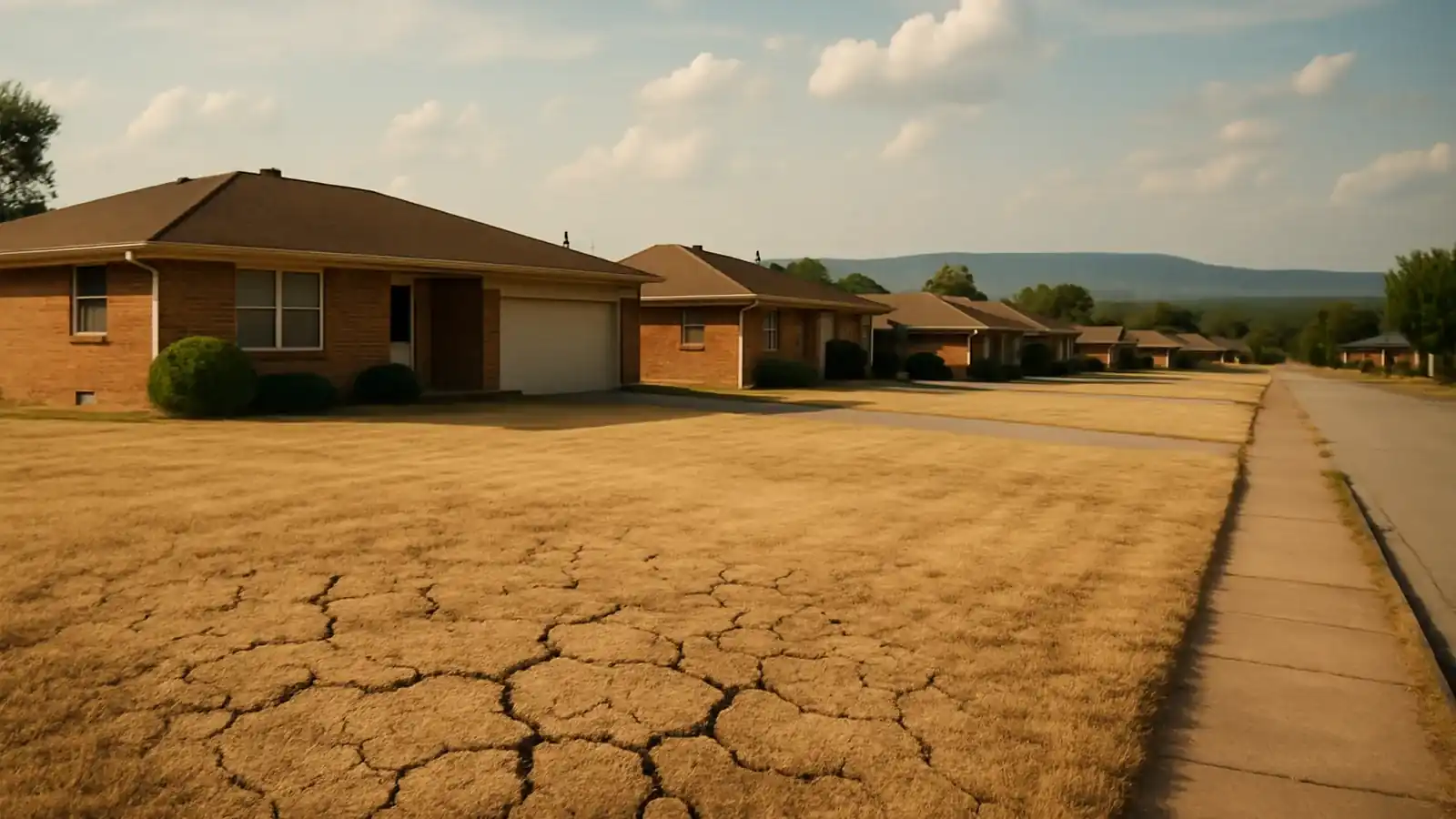
Foundation piering in Tulsa costs about $1,200–$3,000 per pier, and most settling repairs use three to eight of them, so a typical job totals $4,000–$15,000. Each pier is pushed down through the clay that moves with the seasons until it reaches firm ground, and its stopping pressure is recorded.
Here's what settlement actually is on Green Country clay, and how a pier ends it.
Settlement is the clay withdrawing support
A footing doesn't sink because the house grew heavier. It sinks because the soil beneath it shrank away. Expansive clay across the Arkansas River valley holds substantial water through wet periods, then releases it through the dry stretches Oklahoma is known for, and as it dries, it contracts, leaving voids the footing settles into. Repeat that through enough drought-to-deluge cycles and the corner that dries fastest sits measurably below the rest of the house.
This is why patching alone does not last in Tulsa. Filling the crack leaves the cause at work below, and the next dry summer opens it back up. The lasting fix is to stop resting the house on the layer that moves.
How a pier ends the argument
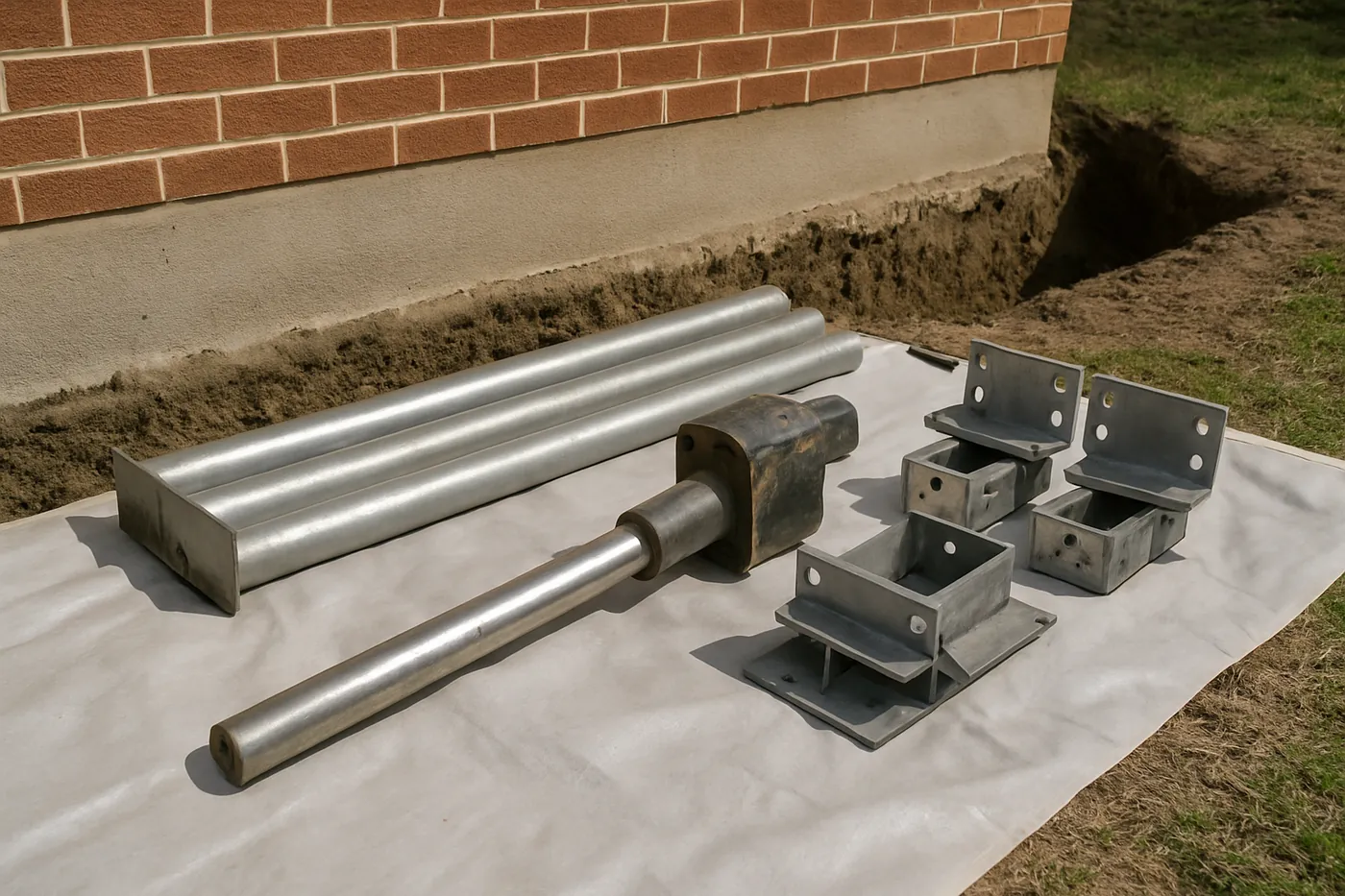
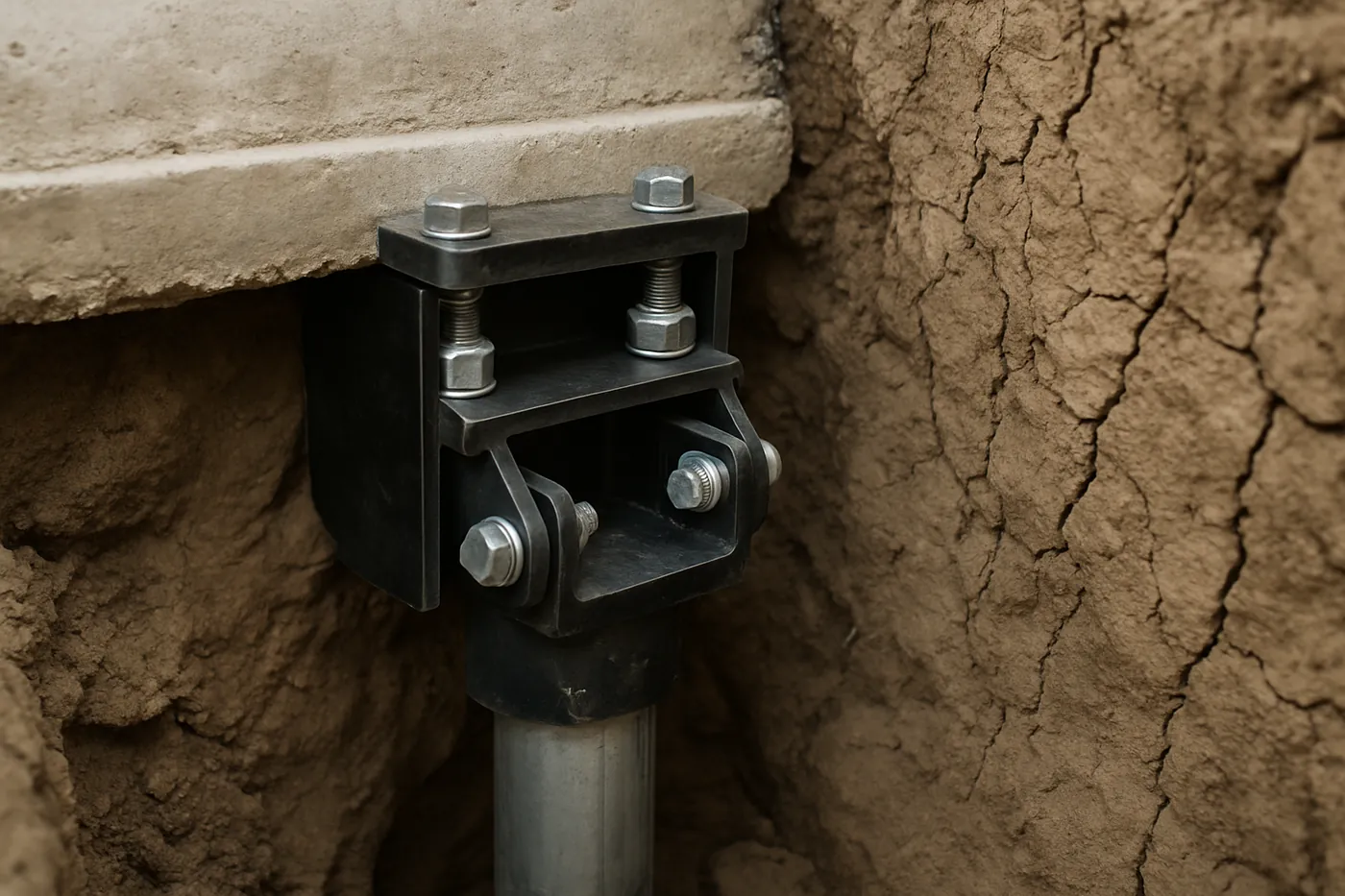
A steel pier is a column pressed into the ground under the footing one section at a time with hydraulic rams, until it will not go any deeper, which shows it has reached soil that holds weight without shifting through the seasons. A bracket fastened to the footing hands the house's load over to that column, and from then on the footing rests on ground that does not care whether it is April or August.
Refusal depth varies across a single lot, and it varies more across this metro than homeowners expect: river-valley soils behave differently than upland ones a few miles east. Each pier is driven to its own depth and its refusal pressure recorded, which is what separates engineered work from a crew installing every pier to the same number.
What sets the pier count and the price
- The affected run: defined by floor elevations, not by the size of the house
- Depth to stable bearing: deeper refusal means more pier sections per location
- Foundation type: slab perimeters, pier-and-beam, partial basements, and chimney footings each carry different bracket work
- Access: tight midtown side yards and mature landscaping add labor hours
Timeline and living through it
Pier work takes from two days to a week depending on how many piers there are and how easy they are to reach, and you can keep living in the house the whole time. The piers are raised together while crack widths indoors are watched. When the job is done, ask for the pier log, photos of each stage, and the warranty paperwork.
Which pier belongs under this house?
On Arkansas River valley clays the pier's job is to opt out of the drought-to-deluge cycle: carry the house past the layer that swells and shrinks and let the swings happen around the steel.
| Option | What it does | What the ground here decides |
|---|---|---|
| Pushed steel | Pressed to refusal against the house's own weight | The default for slab suburbs: driven through the active clay to steady ground |
| Screwed steel | Advanced until a measured torque is reached | For older midtown pier-and-beam homes without the mass to press against |
| Cast concrete | Placed and cured against firm strata | Occasional here, where firm strata sit shallow enough to cast against |
The clay will keep cycling after the piers go in. That is the design, not a flaw. What changes is that the house stops riding along.
Piering questions, straight answers
How many piers does a Tulsa house usually need?
Most settlement repairs use three to eight piers, placed where the floor-level survey shows the footing actually dropped rather than spaced evenly around the perimeter. Counts cluster along one elevation more often than they spread, usually the side that dries fastest through an Oklahoma August.
How deep do piers go here?
Below the active clay zone, which in the Tulsa area can run several feet. Piers are driven hydraulically until they refuse further advance on stable bearing, and the refusal pressure is logged for each one. Depth differs between river-valley lots and upland properties, so it should be measured rather than assumed.
Will piering lift my house back to level?
Often part of the way and sometimes all of it, but stopping the movement is the goal and regaining height is extra. Lifting is tried where the house can safely handle it, with crack widths watched as it happens. On homes that have moved for decades, some of that movement will not come back, and an honest specialist tells you so beforehand.
Can piering work on a house with a finished basement?
Piering can work on a house with a finished basement. Exterior piering happens outside entirely, so finished interior space stays untouched. Where interior work is genuinely required, the scope should name each location before anything starts so you can plan around it. Midtown homes with partial basements get the same approach.
Is there a warranty?
Ask for one. A transferable warranty on the piers, with its paperwork, matters at resale: Oklahoma buyers' inspectors know this soil and look for documented repairs. Ask for warranty terms in writing with any bid you're comparing.
Get a Tulsa foundation evaluation
Tell us what the house is doing (stair-step cracks, doors that stick every August, sloping floors, separating trim) and we'll pass it to one independent local specialist for an evaluation. A local specialist who serves Tulsa will call you back.