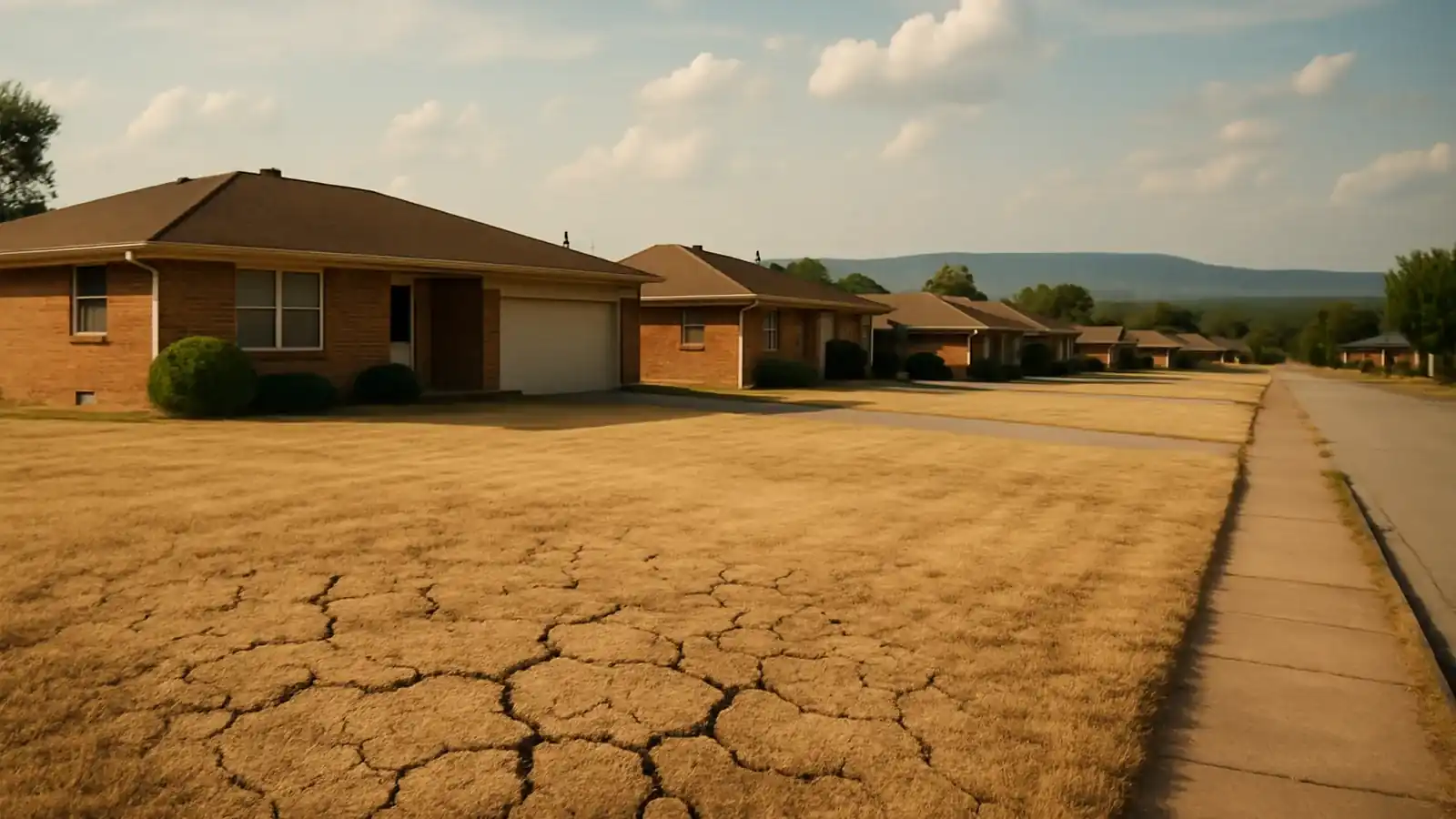
Slab foundation repair in Tulsa on a slab usually costs $3,500–$12,000, depending on how much of the concrete lost its footing and whether piers are needed inside the house as well as around the edge. Nearly every time, the cause is the same: clay shrinking out from under the slab in a dry spell.
A slab house shows trouble differently than a pier-and-beam house does. This is how to read the signs.
What a slab does when the clay beneath it moves
A slab-on-grade foundation is one sheet of concrete lying right on the ground, with no crawl space to look into and no beams to reinforce. As the clay beneath swells in a rainy stretch and shrinks in an Oklahoma drought, the slab rides along. If it all moves together, little harm follows. The problem is differential movement: one edge holding while another drops, or the perimeter staying put while the center dishes downward as the soil beneath the middle dries out.
That unevenness pulls door frames out of square, cracks tile along a straight line, and opens gaps between trim and walls. Once you can see it, a laser survey usually finds an inch or more of difference in height from one side of the house to the other.
Perimeter piers, interior support, or both
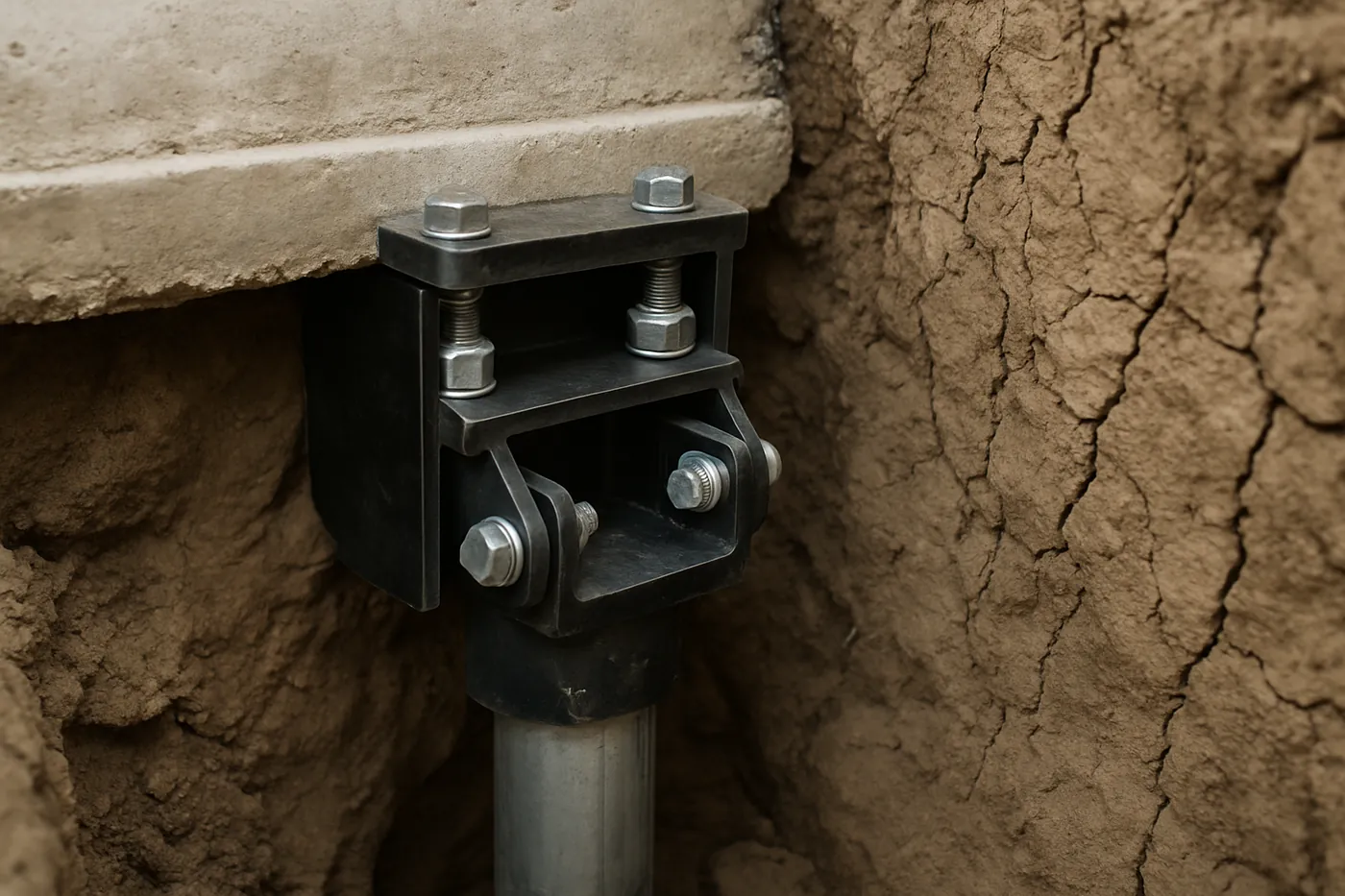
If the readings show the outer edge has sunk, perimeter piers carry the slab's load-bearing walls down to firm ground. If the lowest spot is in the middle of the house, interior support is needed instead: piers set through small holes in the slab, or foam injected to raise it back onto a solid base. Plenty of Tulsa homes need some of each, and the floor readings, not a bundled price, decide the mix.
The suburban growth belt has its own version
Broken Arrow, Owasso, Jenks, and Bixby grew quickly, and many of those subdivisions were built on placed fill spread over the native clay. The fill packs down on its own slow schedule over a decade or so, while the clay below keeps swelling and shrinking with the seasons, so a house only twelve years old can move like a much older one. On those lots the first thing to work out is whether the fill or the clay is moving, because the answer changes how deep the piers must go.
What are the honest options for a moving slab?
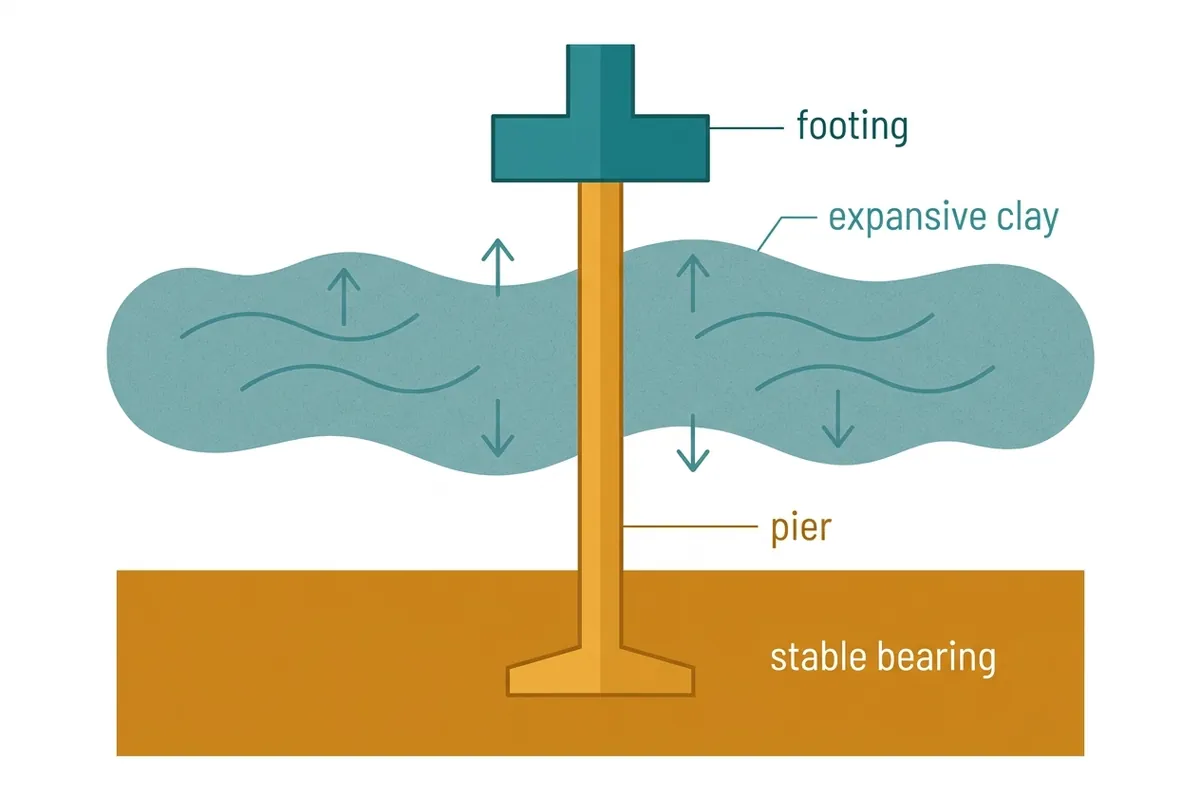
A Tulsa slab lives on the drought-to-deluge cycle: the clay pulls away in a dry stretch, the slab spans the gap for a while, and the crack arrives before the next rain does.
| Option | What it does | The version of it you get here |
|---|---|---|
| Deep support | Piers beneath the slab carry it past the clay | The opt-out: support passes through the active clay and the cycling continues without the house |
| Fill the gap | Grout replaces soil that pulled away underneath | For the voids a hard summer opens where the clay retreated |
| Water discipline | Evens out the moisture the ground sees in a year | Evening out the extremes trims the swing the slab has to survive |
| Repour the section | Removes and replaces concrete past saving | For panels the cycle has already broken through |
Date the cracks against the weather. On this pattern, damage that tracks the dry stretches is the clay's rhythm, and rhythm is what moisture discipline can actually change.
Slab repair questions, straight answers
How do I know if my slab is actually moving?
The rooms warn you before the concrete does: doors pulled out of square, angled cracks running from the corners of doorways, tile splitting in a line, floors that read uneven on a laser. A crack in the slab alone is common and frequently harmless. What surrounds it tells shrinkage apart from movement.
Can a slab be lifted, or only stabilized?
Either can be done. Edge piers hold the slab and often raise it back somewhat; interior piers or foam injection handle the middle of the floor where the clay has pulled away. The mix your house needs depends on where the survey finds the low spots, and the written scope should spell that out.
My Broken Arrow home is twelve years old. Should it be moving?
Here, yes, it can. Newer neighborhoods often sit on builder fill over native soil, the two settle at different rates, and the clay below keeps reacting to Oklahoma weather. In Tulsa County a house's age tells you less than its soil and drainage do.
Could a plumbing leak be causing this?
It is worth checking. A leaking water or drain line beneath a slab can wash soil away and cause settling that looks just like clay movement, and a foundation repair that leaves the leak in place is sure to need doing again. When the pattern points that way, a careful specialist suggests a plumbing test before writing up structural work.
Get a Tulsa foundation evaluation
Tell us what the house is doing (stair-step cracks, doors that stick every August, sloping floors, separating trim) and we'll pass it to one independent local specialist for an evaluation. A local specialist who serves Tulsa will call you back.