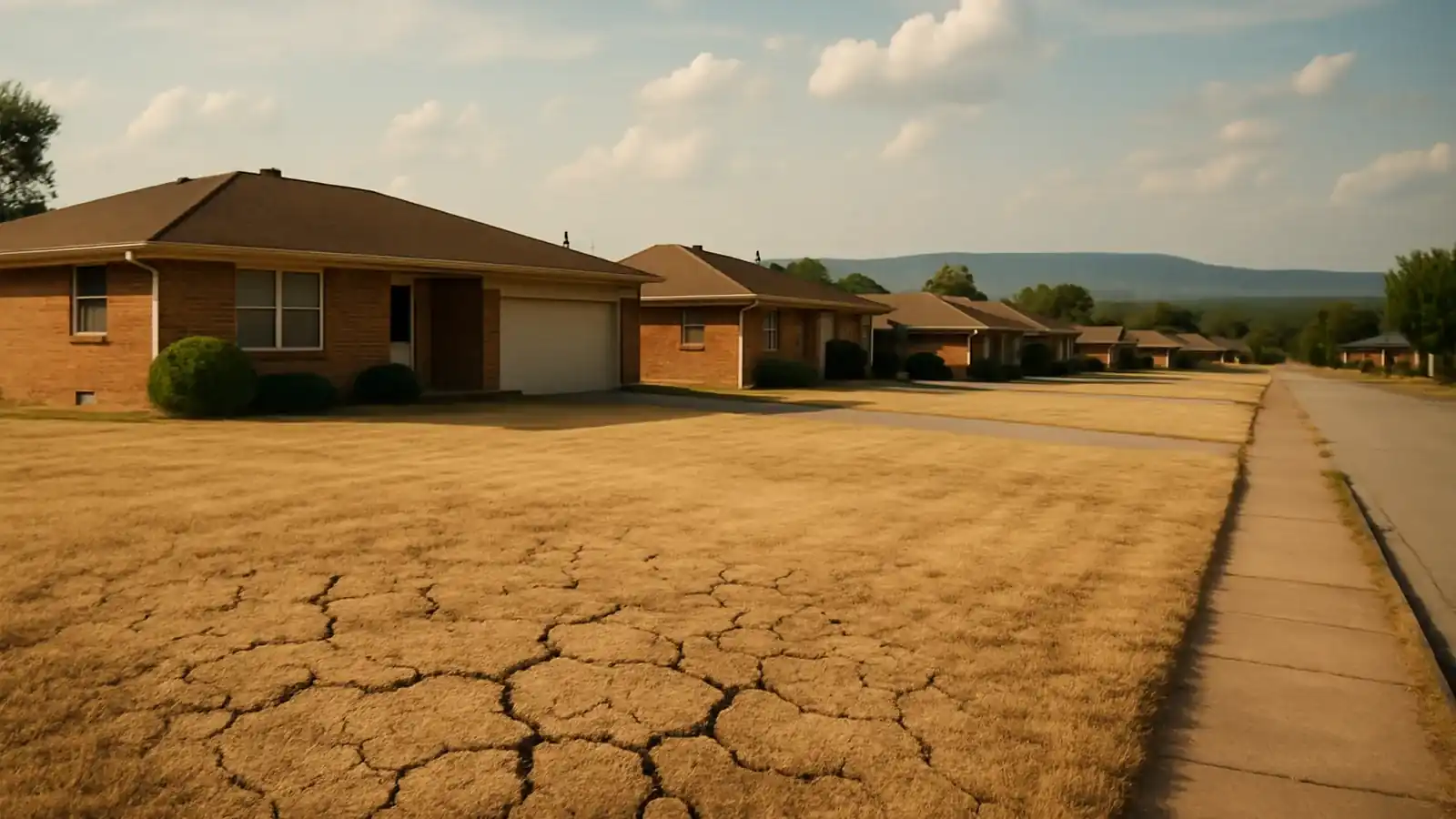
Pier and beam foundation repair in Tulsa on a pier-and-beam house runs from simple shimming and releveling at the low end up to $4,000–$15,000 for a full repair, with steel piers at $1,200–$3,000 each where they are called for. Midtown homes from the 1920s to the 1940s sit on separate footings over swelling clay, and every part under them can be inspected and fixed on its own.
What lives under a midtown floor, how each part fails, and how releveling actually goes.
What’s actually under a midtown Tulsa house
A pier-and-beam home rests on a perimeter beam plus a grid of interior piers (masonry or concrete footings) carrying wood girders, with floor joists spanning between them and a crawl space underneath. Midtown, Maple Ridge, and the older neighborhoods between the river and Route 66 are full of this construction, and it behaves nothing like the slab suburbs: load concentrates at points, wood does structural work, and the clay negotiates with each footing separately. When Green Country’s moisture cycle runs, a single footing can drop while its neighbors hold, which is why these floors slope in patches rather than tilt as one plane.
The four failures, and what each takes
| Failure | What you notice | The repair |
|---|---|---|
| Footing settlement | Sloping floor over one area | Re-support: new pad or pier, jack and relevel |
| Sill or girder moisture damage | Bounce, soft spots, musty crawl space | Replace affected sections: shimming rot is painting rust |
| Shims crushed or slipped out of place | Gaps under baseboards, doors swinging on their own | New steel or hardwood shims and the load checked again |
| Old makeshift fixes | Piled bricks or jacks left under the floor | Proper engineered supports instead |
Most midtown houses have several of these at once, so the evaluation means crawling underneath with a flashlight and a moisture meter, not just circling the outside. Ask for photos of every problem exactly where it was found. Under a pier-and-beam floor, a homeowner can check every item in a bid with their own eyes.
Releveling, step by step
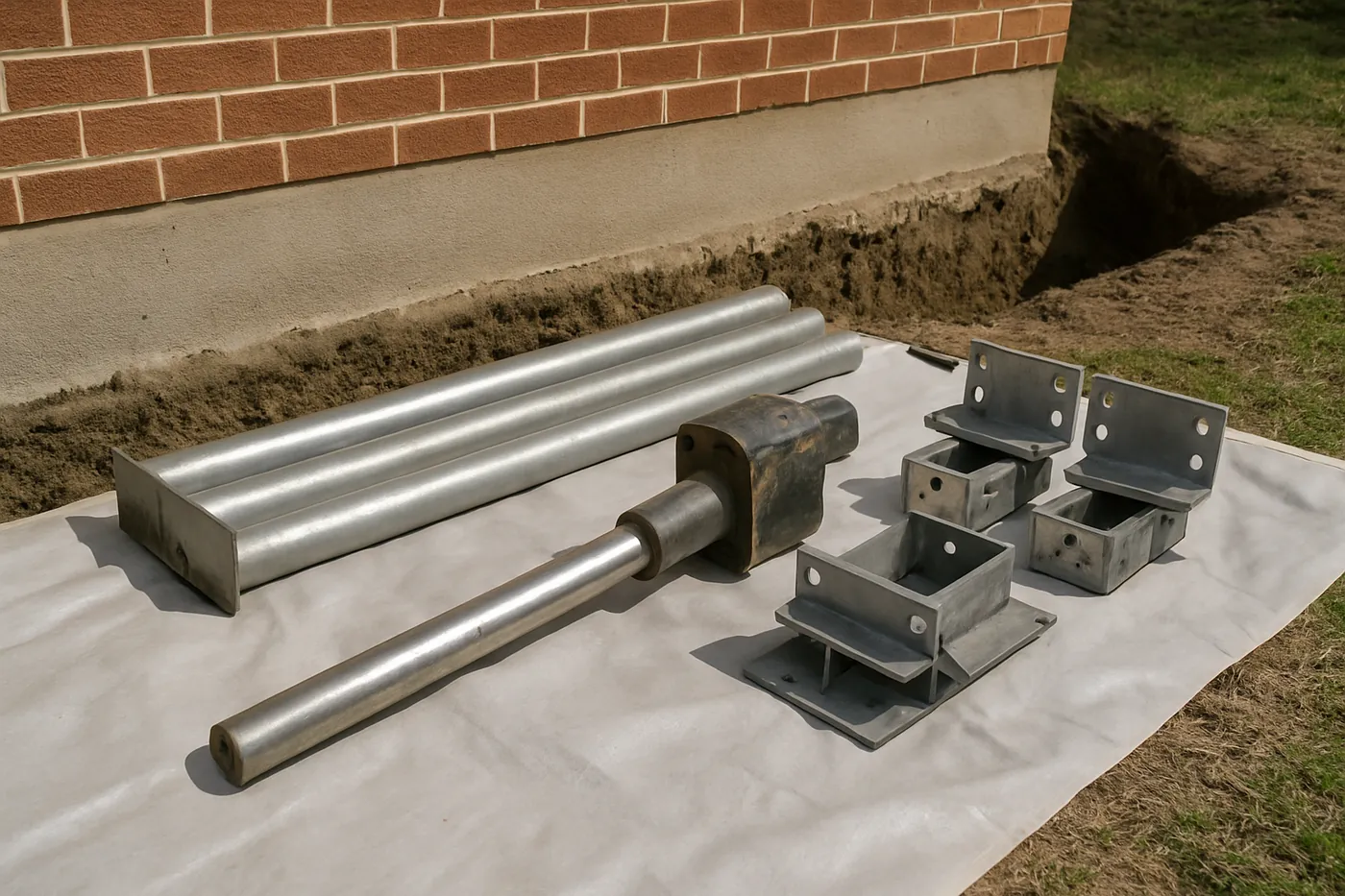
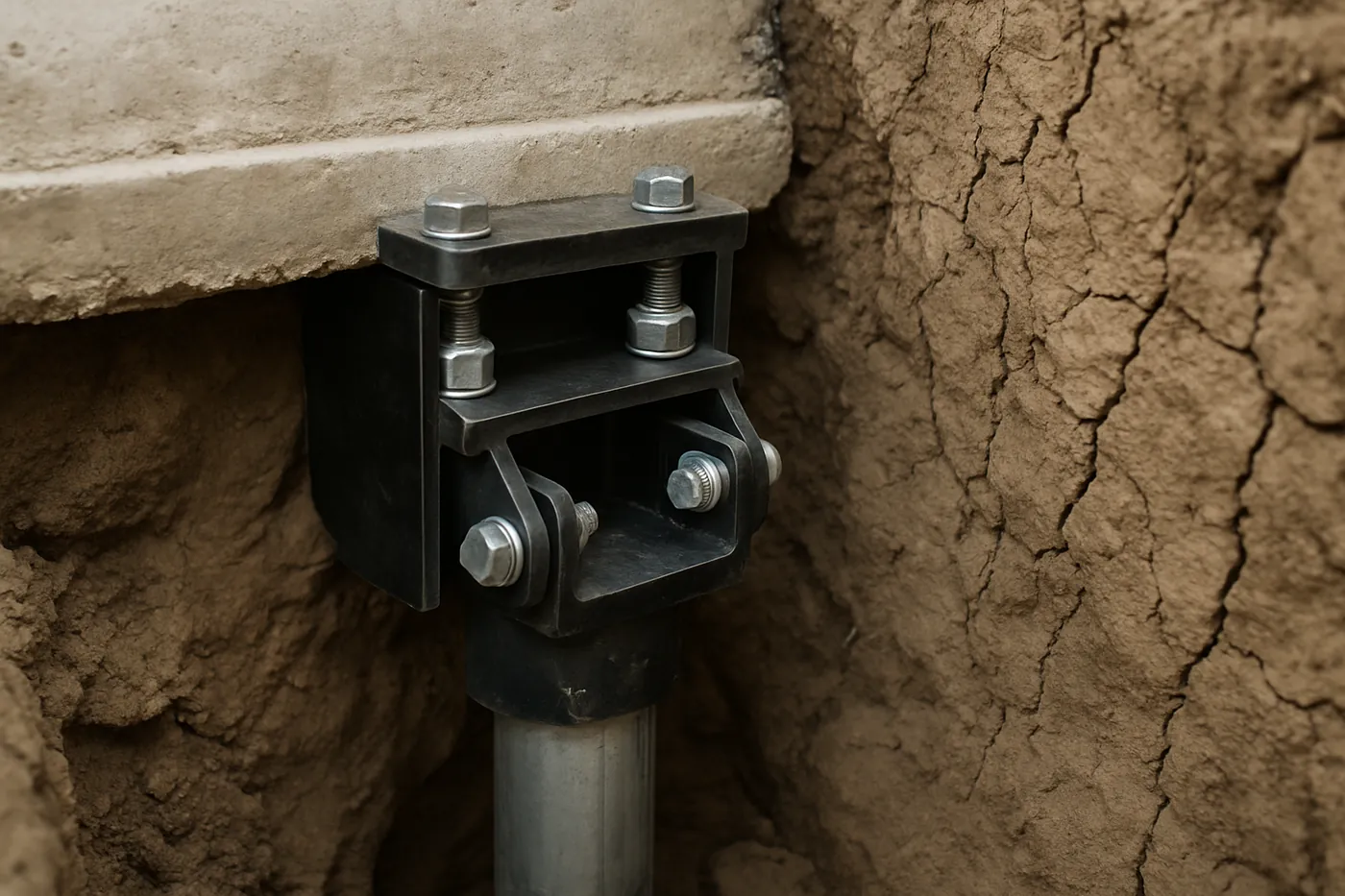
It starts with a floor survey in the rooms above, which shows which girder lines are low and by how much. Below, hydraulic jacks raise those lines a little at a time, compared with the survey as they go; bad shims are swapped for steel or dried hardwood; and footings that are too small or have sunk get new pads, or helical piers where the clay has proven it won’t hold a shallow pad. Lifting stops when the floor is within tolerance, not when it looks done. Where the clay cycle drove the settlement, the same visit prices drainage correction outside: the cheapest way to keep the new level.
Slab neighbors, different rules
Half of what makes Tulsa repair interesting is that the metro runs both systems side by side: midtown on wood and points, the suburbs on slab-on-grade, and the diagnosis, the tools, and the prices all change at that line. If part of the house was converted or added on slab (common in older remodels) the two halves get read separately, because the clay moves them separately. Settlement mechanics for the whole metro live on the settlement page, and every range is itemized in the cost guide.
After the releveling: what to expect
A releveled pier-and-beam house is a house put back in tolerance, not a new one. Doors and windows usually improve within days as the frame relaxes into position, and some need a final adjustment once it has: wait a few weeks before re-hanging anything. Expect a few drywall and plaster cracks to open slightly during the lift itself; that is the movement being reversed, and it is normal on midtown houses that have been out of level for decades. Then keep the crawl space in the condition the repair assumed: ventilation and drainage as installed, no soil piled against the beams, and a look underneath every spring. Shims walk when the ground under the piers gets wet and dries again.
Pier & beam questions, straight answers
How do I know my pier-and-beam foundation has a problem?
You notice it in the floors first: a slope you feel underfoot, springiness in the middle of a room, gaps showing beneath baseboards, doors that swing open or scrape. Underneath, you can see it plainly: tilted piers, flattened shims, a girder dipping between supports, sills with crumbling wood. It's the most inspectable foundation type there is, which is its quiet advantage.
What actually fails under a midtown house?
Four things, usually in combination. Isolated footings settle as the clay cycles. Wood sills and girder ends take moisture damage where ventilation is poor. Shims and blocking crush or walk out after decades of load. And past 'repairs' (stacked bricks, bottle jacks left in place) fail on their own schedule. The crawl-under inspection maps all four before anything is priced.
Can a pier-and-beam house be releveled without major work?
Often, yes. That's the type's great virtue. Jacks lift the affected girder run, failed shims are replaced with proper steel or hardwood, undersized footings get new pads or piers, and the floor comes back within tolerance in a day or two. Costs stay well under perimeter-steel territory when rot hasn't spread. Rot changes the scope: sill and girder sections must be replaced, not shimmed.
Should I close the crawl space vents to keep the clay stable?
No. Ventilation is what keeps the wood alive. The crawl space needs airflow to shed the moisture the clay breathes out, and sealing vents to slow soil movement trades a foundation problem for a rot problem. Moisture control here means drainage outside and clear vents, not closure. Where standing water shows up under a house, that's a drainage-correction job.
What does pier-and-beam repair cost in Tulsa?
Releveling and new shims usually cost little: interior footings and pads come in far below perimeter piers, and the full $4,000 to $15,000 range applies only when settling, rot, and drainage all need fixing together. Steel piers around the edge, where truly needed, cost $1,200 to $3,000 apiece. The written scope should list every pier, sill, and girder repair at its own price.
Get a Tulsa foundation evaluation
Tell us what the house is doing (stair-step cracks, doors that stick every August, sloping floors, separating trim) and we'll pass it to one independent local specialist for an evaluation. A local specialist who serves Tulsa will call you back.