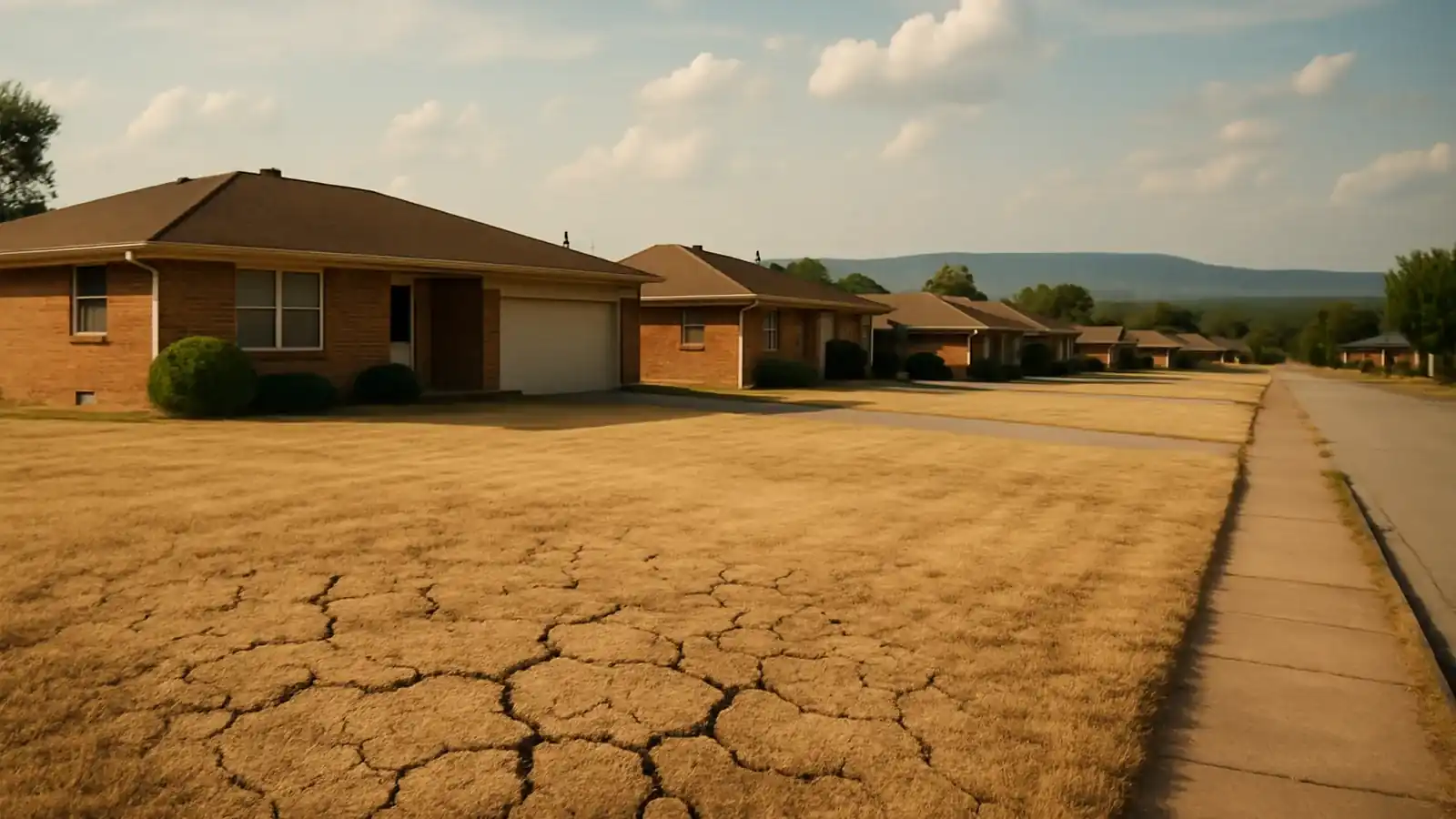
Foundation repair in Broken Arrow runs $4,000–$15,000 for most full repairs, with piers commonly $1,200–$3,000 each. Most houses here sit on slabs over clay that swells in wet springs and pulls back in August, and that cycle explains most of the cracked brick on the city's older streets. A measured evaluation should come before any price.
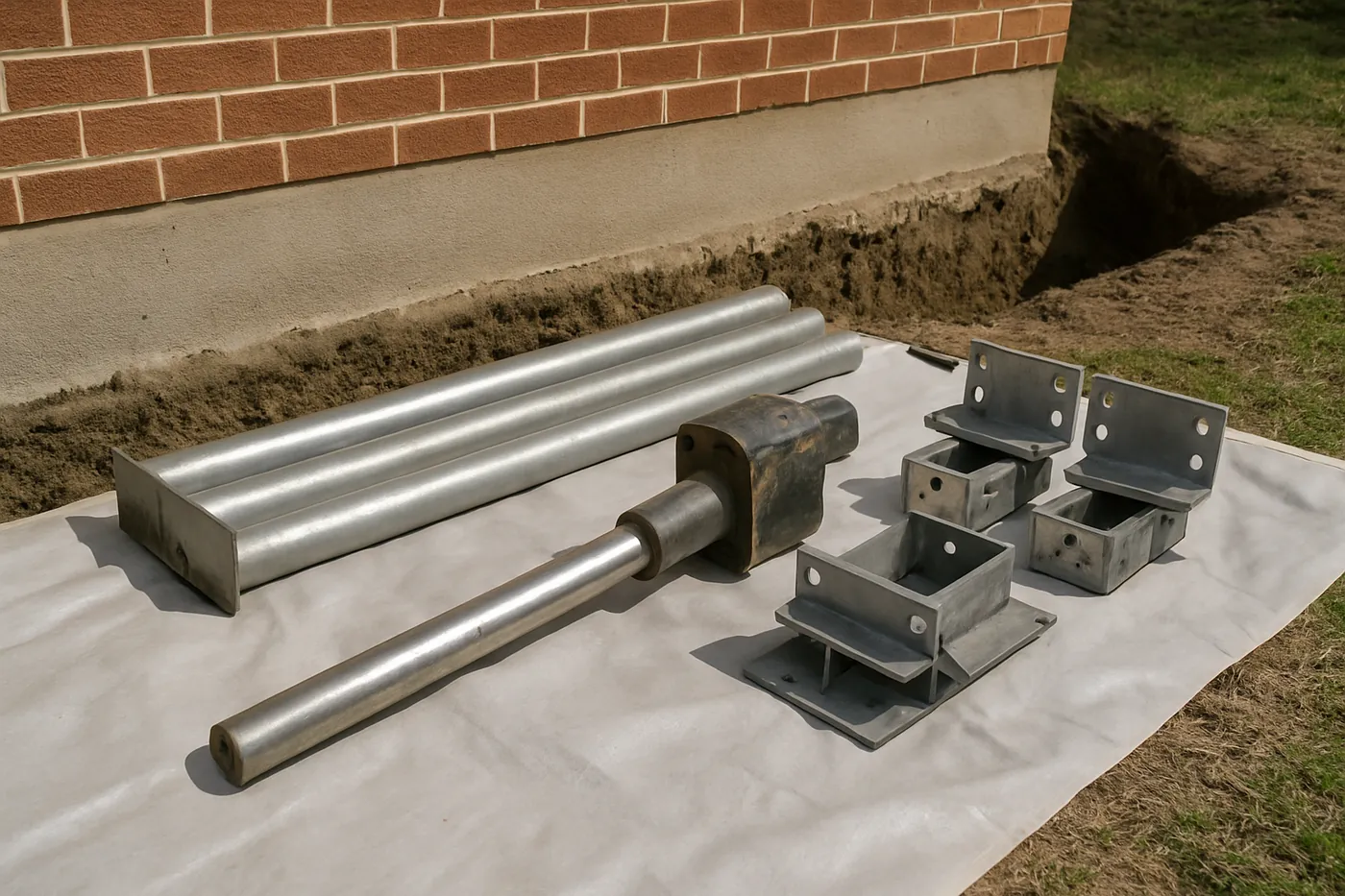
Slab country, three growth eras deep
Broken Arrow expanded in distinct waves, and each left its own foundation profile. The 1970s-80s core north of the Broken Arrow Expressway carries slab homes that have now cycled through forty-plus Oklahoma summers. Their movement is mature, often slow, and frequently well documented by cracks that owners have watched for years. The 1990s-2000s middle ring sits on ground graded during a fast-building period, where fill consolidation and clay cycling overlap. The newest southern and eastern subdivisions are still in their first decade, and their cracks tend to arrive suddenly and alarm owners who assume a young house is immune.
The diagnostic question changes with the era. Older homes get read for how far the movement has already progressed and whether it's still active. Newer homes get the fill-versus-clay question, because that determines how deep piers must travel to find honest bearing.
Flat lots, concentrated water
Much of Broken Arrow sits on relatively level ground, which sounds harmless and creates a specific problem: storm water that arrives has nowhere obvious to drain, so it stands against foundations longer than it would on a slope. On clay, standing water means sustained swelling right where you least want it. Grading and downspout corrections here are often more decisive, and much cheaper, than owners expect.
The Census count behind the three eras
The Census Bureau's 2020-2024 American Community Survey counts about 46,600 homes in Broken Arrow, with a median build year of 1994. The 1970s and the 1980s each account for close to a fifth of them, and about 40% went up in 2000 or later. Only about 4% predate 1960, so the city has little of the very old pier-and-beam stock found in Sapulpa or Sand Springs; its foundation work is overwhelmingly slab work.
Haikey Creek and the city's drainage
The U.S. Geological Survey gauges Haikey Creek and Little Haikey Creek at 101st Street South in Tulsa, west of central Broken Arrow. Lots that back onto a creek or detention channel are where water lingers longest after a storm. Look the address up on FEMA's flood map before a scope is priced, and ask the city's permit office whether the planned repair needs a permit.
Asked in Broken Arrow
What does foundation repair cost in Broken Arrow?
The same metro prices apply: $4,000 to $15,000 for most full repairs and $1,200 to $3,000 per pier. Most Broken Arrow jobs are slab work, since nearly every house there sits on a slab, and the price tracks how much of the slab lost support, not the size of the home.
My 1980s Broken Arrow home has cracked for years. Is it too late?
It is rarely too late to stop the movement. The realistic aim is to halt further settling, not to undo forty years of it, and raising the house back is tried only where the structure can safely take it. The evaluation states plainly what stabilization achieves for your specific house.
Our whole street seems to have the same crack. Coincidence?
Usually not. It typically means the street shares a soil profile or a drainage pattern. That's useful information: where the cause is neighborhood-wide grading rather than one lot, the fix may be different (and cheaper) than piering. A good specialist will tell you when that's what the pattern suggests.
Is a flat lot better or worse for foundations?
Mixed. Flat ground doesn't concentrate runoff the way slopes do, but water that arrives also has nowhere to go, so it stands against the foundation longer and keeps that clay swollen. On flat Broken Arrow lots, grading and downspout work is frequently more decisive than owners expect.
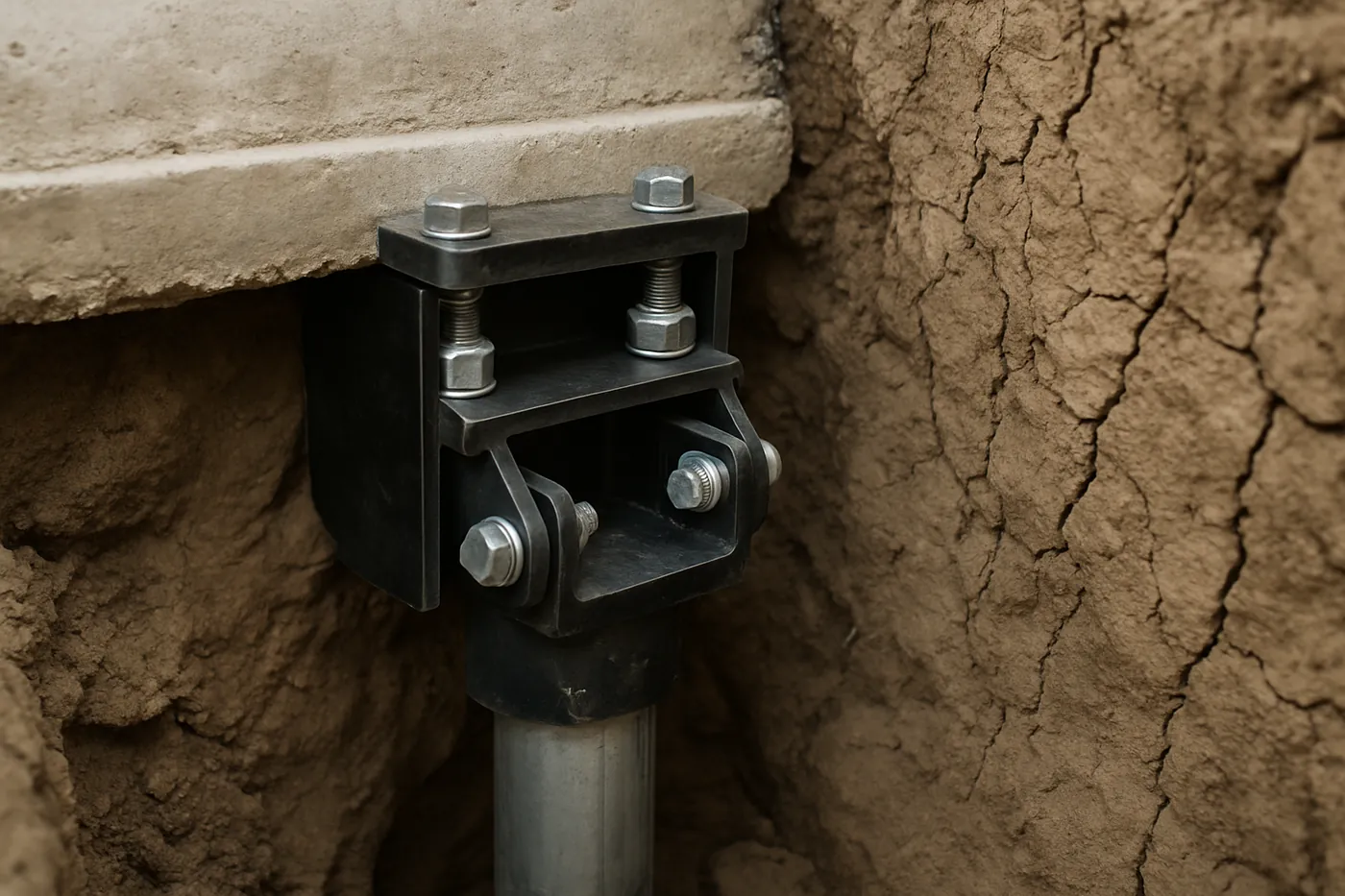
Getting eyes on a Broken Arrow foundation
The specialist who covers Broken Arrow will phone you to arrange a visit; book below or call. If another company has already bid, have that paper ready and ask this specialist to show the reading behind each price so the two line up. The cost guide explains the ranges, and service areas lists the other towns.
Get a Tulsa foundation evaluation
Tell us what the house is doing (stair-step cracks, doors that stick every August, sloping floors, separating trim) and we'll pass it to one independent local specialist for an evaluation. A local specialist who serves Tulsa will call you back.