Most Tulsa foundation repairs go ahead on a measured evaluation alone. An independent structural engineer is worth paying when the diagnosis is in dispute: buying an older midtown house, arguing with an insurer over storm damage, or holding bids that contradict each other. Against repairs running $4,000–$15,000, independent judgment is inexpensive protection.
What each evaluation delivers, the Tulsa disputes that need a stamp, and how the two mesh on a job.
What did you just notice?
People usually reach this page after spotting one particular thing and wondering how much it matters. Typical examples: a crack wide enough to slip a coin into, a door that quit latching this year, a floor that seems to run downhill toward one wall, brick that has split in steps above a window, or an inspection report that mentions movement without saying how much.
By itself, none of those means hiring an engineer. The deciding question is whether people disagree about the cause, since settling that question is what an engineer is paid for, and no contractor can settle it about its own bid. If a crack is growing and everyone agrees why, a measured evaluation will do. If two companies have examined the same wall and given you two explanations, an independent opinion earns its fee.
Urgent cases change the order: a wall you can see bowing, a floor sinking over days instead of seasons, water showing up where it never has. Have it checked right away, and work out who was right later.
Two products that start with the same tape measure
Contractor evaluation and engineer’s inspection begin identically: floor elevations, crack mapping, plumb readings, and on pier-and-beam houses the crawl-under with a camera. Where they differ is in what you receive. The contractor's returns as a measured report with a priced scope: objective numbers, interested bid, and you should read every contractor’s diagnosis that way. The engineer’s returns stamped and unattached to any repair revenue, which is precisely why the contested cases below want it.
Who to call first, by situation
| Situation | Start with | Why |
|---|---|---|
| Cracks or sloping floors that are not changing | Contractor evaluation | Measured and priced; ask whether there is a fee. Little lost if it is minor |
| Buying older midtown stock | Independent engineer | Decades of cycles and legacy repairs need unsold judgment |
| Bids disagree on cause | Independent engineer | Settlement and heave take opposite repairs on this clay |
| Storm-damage claim contested | Independent engineer | Causation opinions move adjusters; adjectives don’t |
| Major movement that needs a new design | Engineer first, contractor after | A stamped design, then installation to match it |
Why this metro generates the disputes
Tulsa’s ambiguities are structural. The drought-to-deluge cycle produces movement that can read as settlement or heave depending on when you measure; the housing split means a slab diagnosis and a pier-and-beam diagnosis are different crafts; and storm season adds causation fights the insurance page details. Most cases resolve with the survey. The ones that don’t are credibility problems rather than measurement problems, and independent credibility is the engineer’s entire product.
When an engineer and a contractor share the job
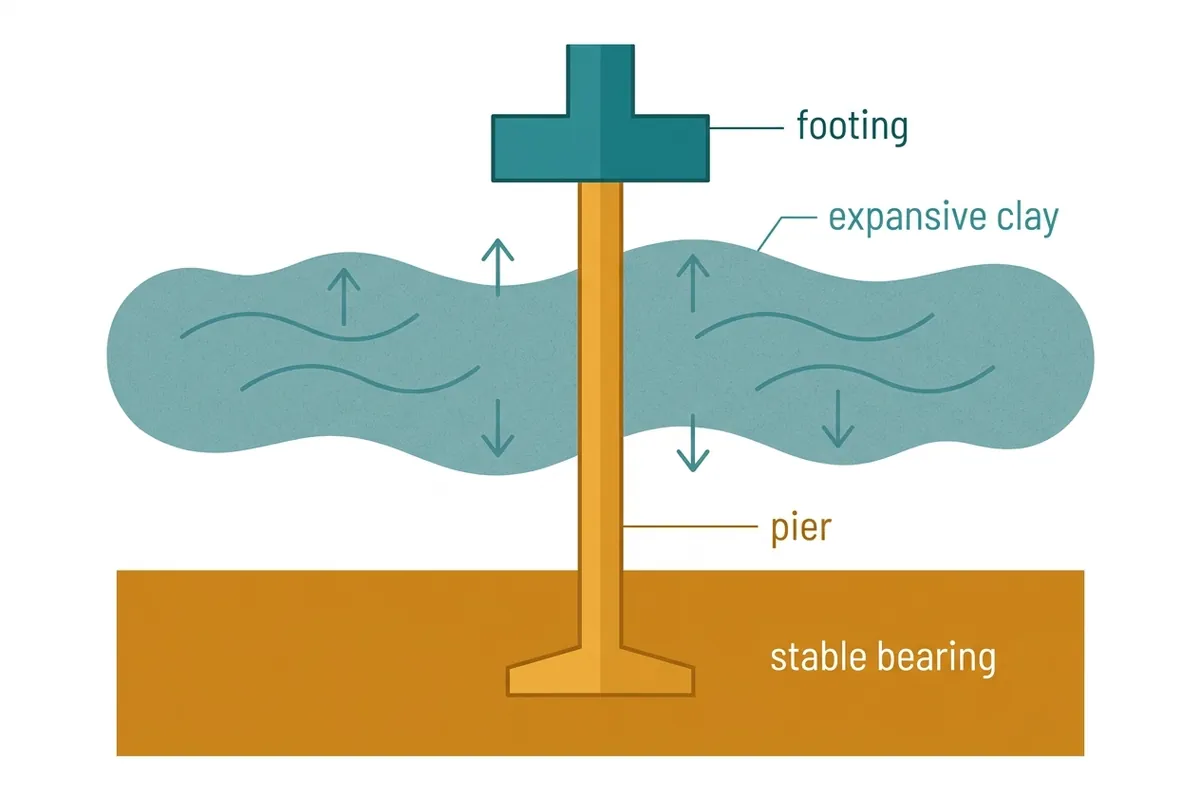
Working together, the order is straightforward: the engineer specifies where the piers go, what each must carry, and the design; the contractor builds exactly that and records each pier's torque or refusal against the specification; the engineer then checks the records without another site visit. You end up with a stamped diagnosis, a documented installation, and written warranty terms, a complete file that a later buyer's inspector will read as “engineered, not guessed.” The cost of that stack, layer by layer, is in the cost guide.
What a report worth paying for contains
Evaluate the report itself, not just the letters after a name. A useful report gives floor elevations as numbers instead of adjectives, a clear cause, a specific fix (which pier, how far apart, and the depth or load it must reach), and a stamp behind all of it. In a metro split between midtown pier-and-beam and suburban slab, it should also name which system it is evaluating and judge it by that system’s tolerances, because the two are not graded on the same scale. Avoid paying for a letter that just lists the cracks you already found and closes with “consult a foundation contractor.” Hang on to a good report: Oklahoma sellers fill out a property disclosure, and a stamped cause plus a documented repair is the best answer you can give on it.
Engineer questions, straight answers
Do I need an engineer before getting Tulsa repair bids?
Most of the time, no. A careful measured evaluation collects the same information: floor heights, crack widths, and for older midtown houses, a look under the floor with photos. The engineer's stamped version becomes worth buying when independence is the point: a purchase, an insurance causation fight, or bids that name different causes.
What does the engineer deliver that a contractor can't?
A conclusion nobody profits from. The specialist's evaluation is measured, but it arrives attached to a bid, so weigh it accordingly. An engineer's report is diagnosis alone: cause, severity, prescribed remedy, professional stamp. Lenders, courts, adjusters, and skeptical buyers treat that independence as the product, because it is.
When is the engineer clearly worth it in Tulsa?
Pre-purchase on older midtown pier-and-beam or partial-basement stock, where decades of clay cycles and old improvised repairs are part of what's being bought. When bids disagree: settlement versus heave point opposite directions on this clay. When a storm-damage claim needs causation established. And when severe movement calls for a designed, stamped repair.
Storm claims come up a lot here: how does the engineer fit?
As the causation referee. After wind damage, adjusters sometimes attribute foundation cracks to pre-existing settlement; homeowners believe the reverse. An independent engineer's opinion, built on measurements and dated evidence, is the document that moves that dispute: in whichever direction the evidence actually points, which is the risk and the value.
Will a contractor install to an engineer's specs?
A reputable one will, and when the diagnosis is disputed it is the safer path, since the cause is settled before any steel shows up. Ask for a line-by-line bid on the engineer's scope, with each pier's torque or stopping pressure recorded against it so the engineer can check the paperwork. If the contractor thinks the design misreads the measurements, it should tell you and the engineer in writing, not quietly do something different.
Can the contractor's engineer count as independent?
Only if you are clear about who they work for. Many repair companies keep a licensed engineer on hand to stamp their designs, and that is genuine engineering, but it serves the company's scope rather than questioning it. If what you need to know is whether the house needs the repair at all, hire your own engineer so you are the only client.
Will a lender or buyer require an engineer's letter?
Sometimes, and it is worth knowing before you are under contract. Lenders and buyers who see foundation repair on a disclosure often want a licensed opinion that the work was appropriate and the structure is stable. A contractor's invoice usually does not satisfy that request. If you are repairing a house you plan to sell, the engineer costs less now than a renegotiation later.
Get a Tulsa foundation evaluation
Tell us what the house is doing (stair-step cracks, doors that stick every August, sloping floors, separating trim) and we'll pass it to one independent local specialist for an evaluation. A local specialist who serves Tulsa will call you back.